

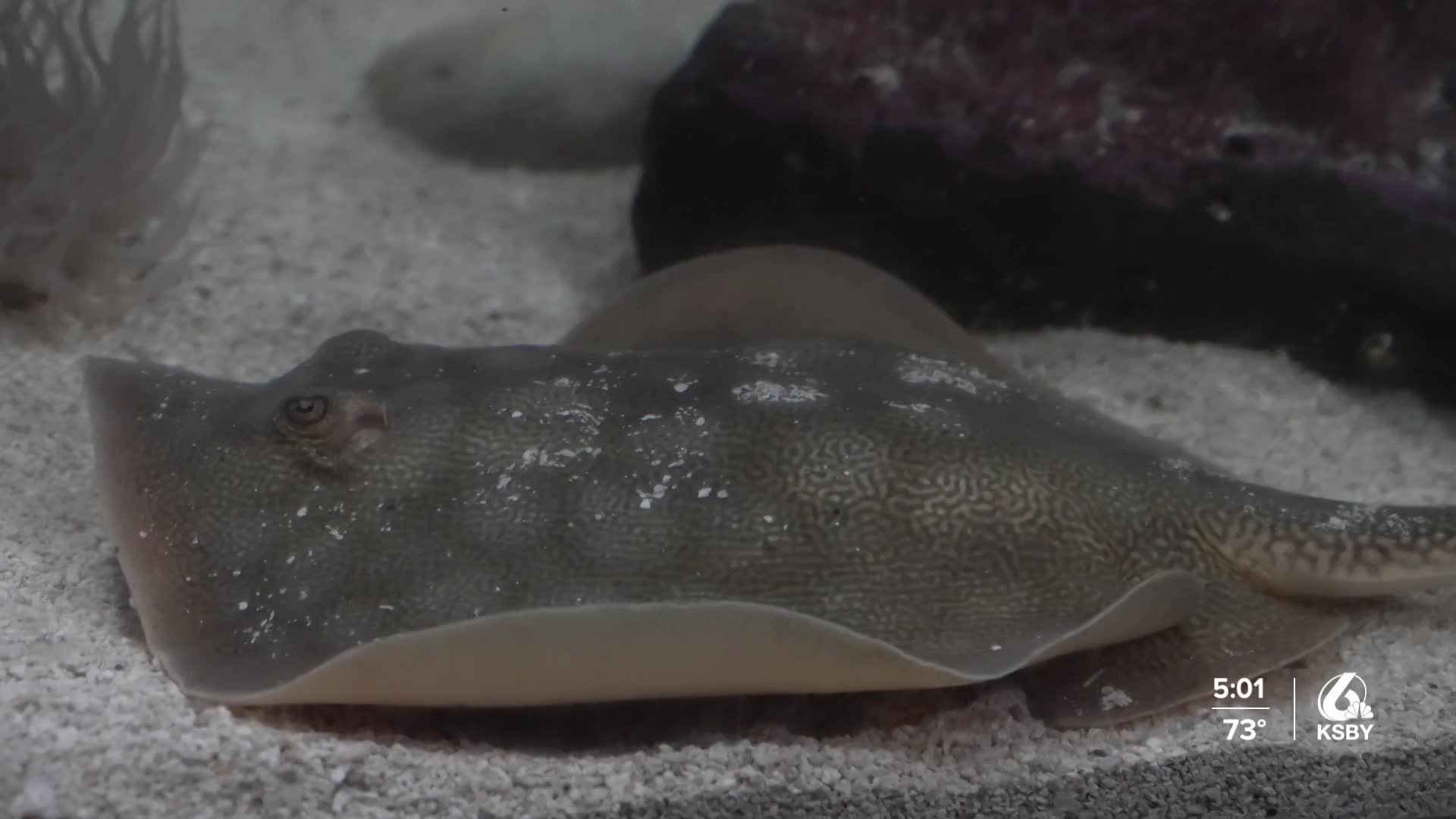



Warmer weather could be bringing more stingrays up to the Central Coast.
Mark Perry visits the beach near the West Grand Avenue entrance in Grover Beach every day. As part of his routine, he takes a dip in the ocean.
“While I was out there about chest deep water, I jumped over a wave," Perry said. "Then I landed on the ground and it felt something bit me.”
After getting out of the water on Saturday and finding help from a lifeguard, Perry was told he wasn’t bitten, but stung by a stingray. He said it felt like a mix between a bee sting and a rattlesnake bite.
“The bee sting [was the] the initial pain, and then you kind of get this coursing pain that goes through your body, and it comes up sporadically," he said.
Kathryn Wilkins at the Central Coast Aquarium said the sting comes from barbs on the stingray’s tails, which contain a toxin.
“Normally, when you hear about a stingray like sting and that pain, it is a toxin," Wilkins said. "It's not lethal to humans, at least not the round ray.”
The round ray is a local species of stingray that’s pretty common on the Central Coast year-round.
Wilkins said if you are stung, you should seek medical attention.
“The most commonly accepted practice is that if you do get stung, you should soak whatever part of your body got stung in hot water," she said. "Not scalding, but hot. It does help to break down that toxin and lead to faster pain relief.”
CSU Long Beach says one of the best ways to stay safe in the water is to do the “stingray shuffle,” where you slide your feet along the sand instead of raising your feet when you walk.
If you are heading into the water, try to spend the least amount of time possible touching the sea floor, check where stingrays are common, or find footwear that offers stingray protection.
RELATED: Locals report seeing more sharks along the Central Coast
Ashley Tjepkema also works at the Central Coast Aquarium, and said she hasn’t seen an abundance of stingrays on the Central Coast yet, but it’s not out of the question.
"The warming waters from El Niño can shift their ranges northward," Tjepkema said. "Whereas we typically more see them in Southern California and Baja, we might start to see them coming up a little bit more along our coastline to kind of escape from some of that heat."
Perry said in the future, he’s going to stick with the shuffle and invest in protective booties.
“I'm not going to stop going in the ocean just because I got stung by a stingray once," Perry said. "I'm going to try to take precautions after that."
