



If you've spent time on social media lately, you've probably seen influencers promoting peptides as the next big wellness trend.
Many claim different peptides can help build muscle, speed recovery, lose weight or even slow aging, but while some peptide medications are backed by years of research, doctors say many of the products gaining popularity online come with unanswered questions.
Dr. Thomas Rehder with Dignity Health says it's important for consumers to look beyond social media before trying these products.
"One of the biggest concerns is that influencers may or may not actually be using what they're promoting, especially if they have a financial stake in it," Rehder said. "There's a financial incentive behind that, which is concerning."
Peptides are short chains of amino acids that act as messengers throughout the body. Some peptide medications, including insulin and GLP-1 drugs like Ozempic and Wegovy, are FDA-approved and have undergone extensive testing.
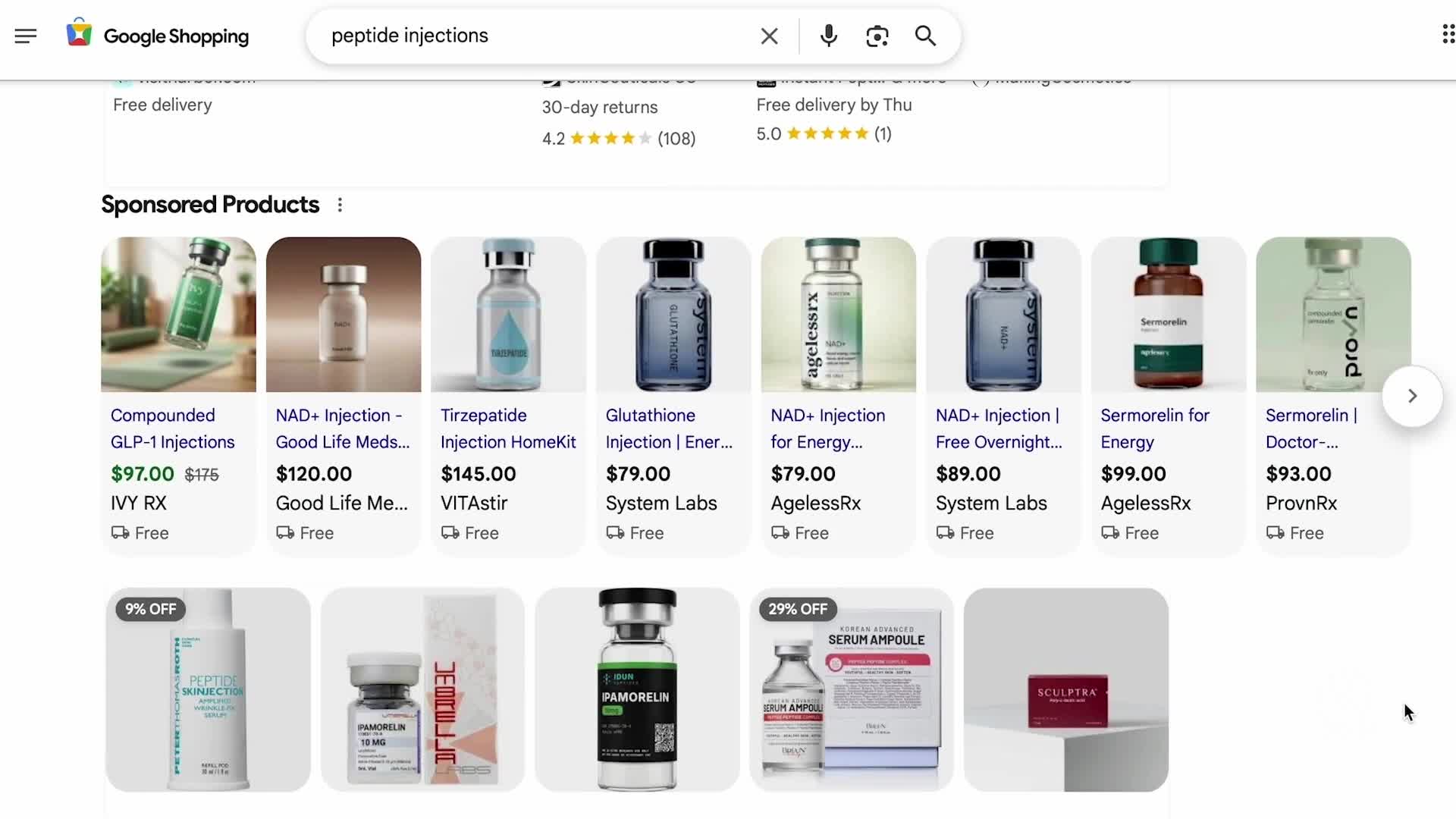
However, the American Medical Association warns that many injectable peptides marketed online for weight loss, muscle growth, recovery and anti-aging have not been approved by the U.S. Food and Drug Administration.
Dr. Rehder says the biggest concern isn't necessarily whether these products produce the desired effect; it's whether they're safe years down the road.
"They're on that list because of a lack of safety data," Rehder explained. "It's not a lack of efficacy. It might unlock the door you're trying to open, but maybe it unlocks a lot of other doors that shouldn't be unlocked. Until researchers know it's safe, they don't want a lot of people getting hurt."
He says history has shown that even medications once commonly prescribed by doctors have later been found to carry risks that weren't initially understood.
"It may make you feel good in the short term," Rehder said. "But five, 10 or 20 years later, are there concerns? Sometimes that really does happen. There are drugs we commonly prescribed years ago that today we would never use because we learned more over time."
Rehder encourages anyone considering peptides to speak with their healthcare provider and rely on trusted medical guidance instead of influencer recommendations or social media trends. He told us to look for information on websites that end in ".org" instead of ".com" because the latter could just be trying to sell you something.
The topic is also drawing attention at the federal level. The FDA's Pharmacy Compounding Advisory Committee is scheduled to meet July 23-24 to review whether seven peptide ingredients should be allowed for use by compounding pharmacies under the agency's 503A Bulks List.
