

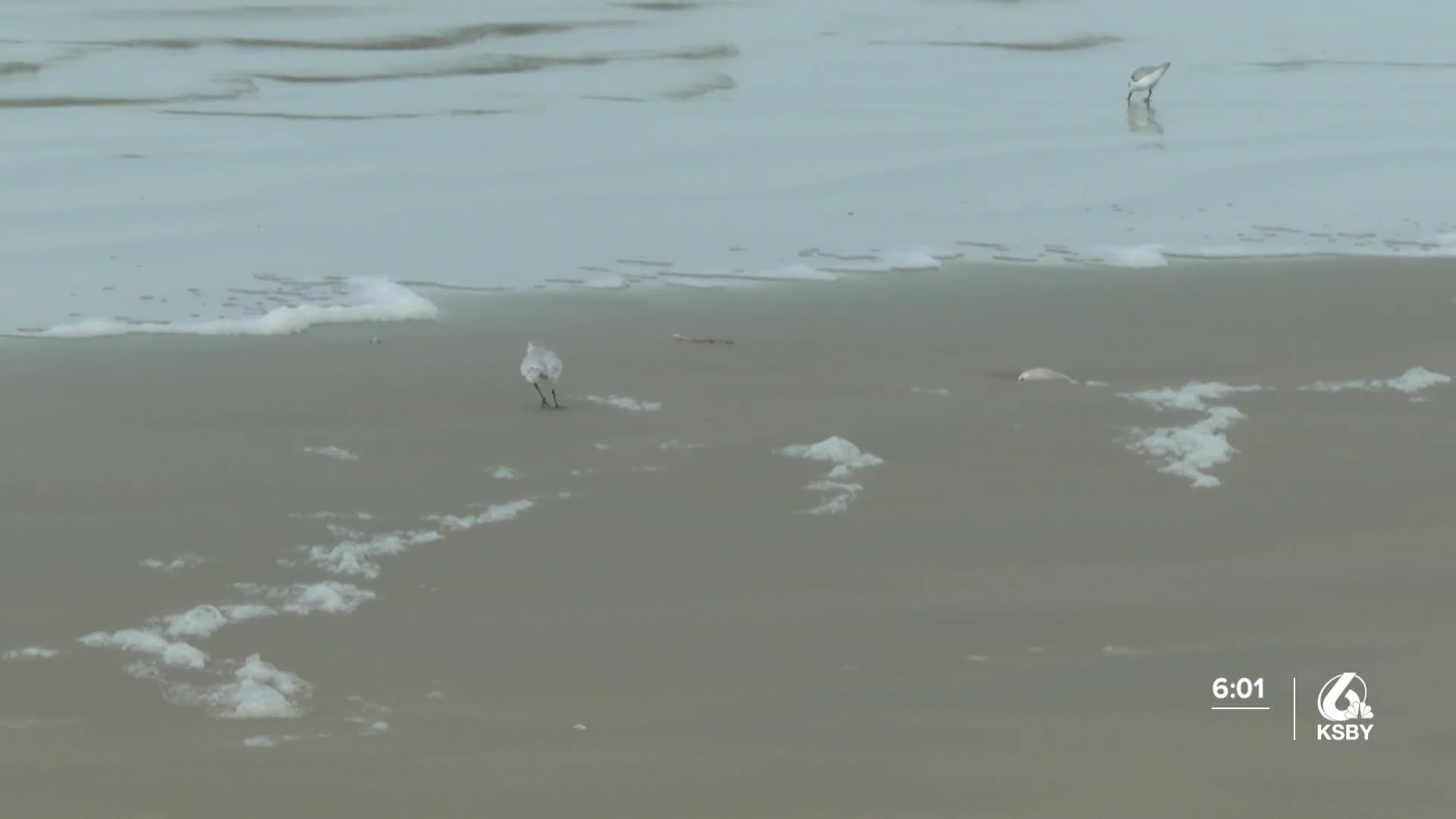



At the Oceano Dunes, animals like the endangered Western Snowy Plover make the sand their home. They’re not the only ones who enjoy this area but a California judge just ruled in favor of the birds after a legal battle that’s lasted almost a decade.
The endangered Western Snowy Plover has been at the center of a legal battle on the Oceano Dunes between two organizations: the Oceano Dunes district of the California State Parks and the Center for Biological Diversity.
For 25 years, Darryl Armstrong has visited the dunes at least twice a week.
“It's a complicated, thorny problem and anybody who thinks, well, all we have to do is doesn't understand the whole complexity," Armstrong said.
These dunes are a battlefield for a fight that started ramping up during the COVID-19 pandemic in 2020.
When the Oceano Dunes were closed to the public, Jeff Miller, the Senior Conservation Advocate for the Center for Biological Diversity, says the plovers expanded their nesting areas beyond the spots set aside to protect them.
“Unfortunately, I discovered and busted state parks illegally interfering with the snowy plover nesting," Miller said. "So they were destroying nests and putting up things to deter nesting to try to keep the plovers from moving into areas that they wanted to reopen back up to off-roading and to beach driving.”
That brings us to the present, where a California judge ruled that state parks violated the Endangered Species Act.
KSBY looked into the case documents to find the reasoning.
During the lawsuit, the parks admitted though they tried to avoid it, the off-road vehicles likely harmed plovers.
When a government agency gives permission for off-roading and those activities end up hurting endangered animals, the agency can be sued under the Endangered Species Act.
They also agreed that if the current conditions continue, more plovers will be harmed.
KSBY reached out to the state parks twice in the past week, but didn’t get a response. When we called a representative from the Friends of Oceano Dunes, they said they’re actively engaged and planning on making an announcement soon.
So what’s next? According to the judge, both agencies need to work together to find a solution.
“Currently the federal Endangered Species Act is the law of the land. Everyone, even state parks, has to follow it," Miller said. "As long as that's the case, we're going to push that and make sure that they do. I'm hopeful we can get to a solution.”
State Parks wants the public’s opinion on this new version of their environmental impact report. If you want to share your thoughts, email your comments to: comment@oceanoduneshcp.com.
