

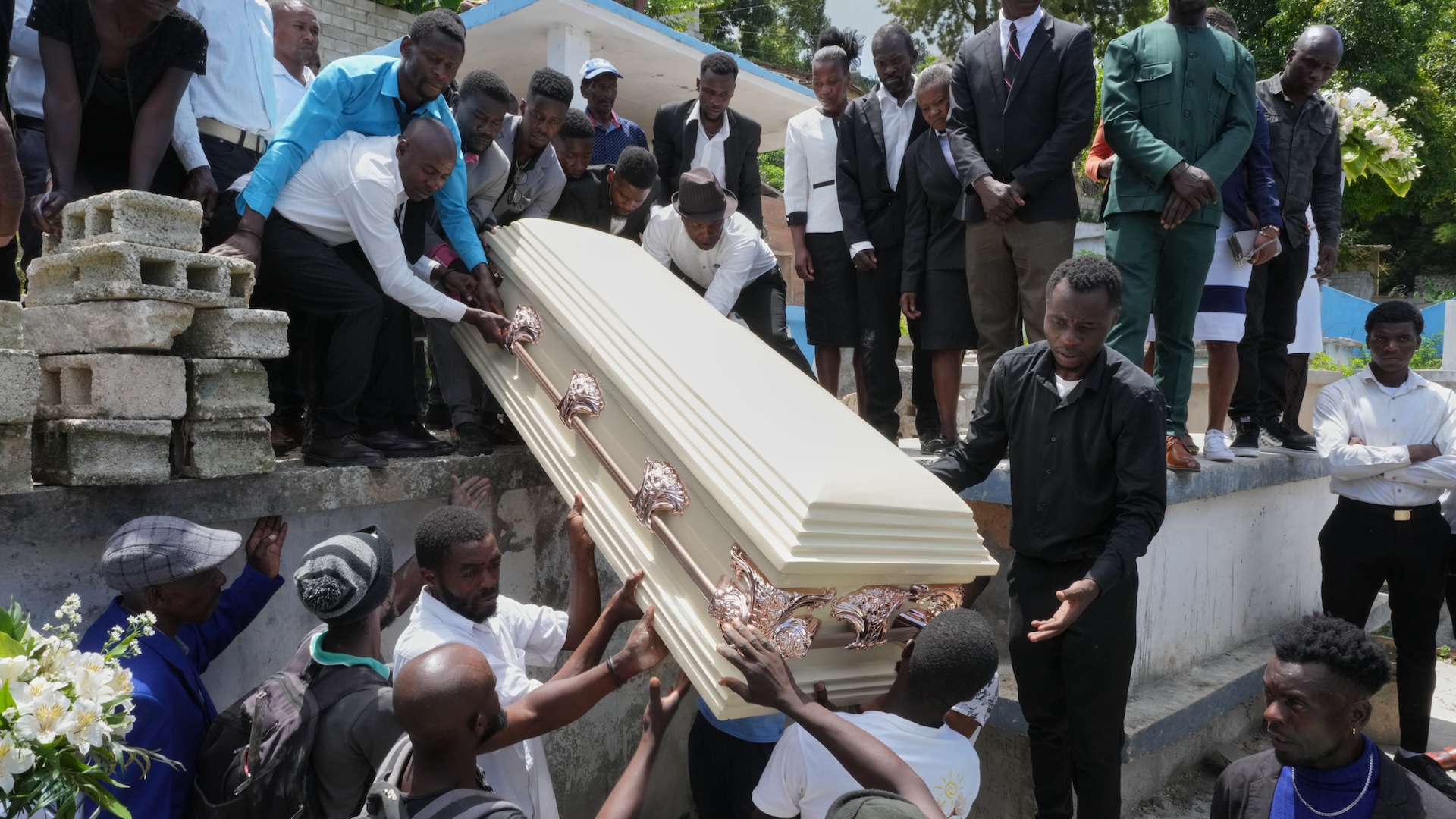


As world leaders gathered at the United Nations this week, Haiti emerged once again as a major test for the international community after years of failed attempts to contain the country’s spiraling gang violence.
A new U.N.-backed Gang Suppression Force is ramping up operations in Haiti, replacing an earlier international security mission that struggled to stop gangs from tightening their grip on much of the capital, Port-au-Prince.
With the United States heavily involved again — financially, politically and logistically — officials and analysts are watching closely to see whether this latest effort can succeed where the last one fell short.
“It’s peace enforcement,” said Diego Da Rin, Haiti analyst at the International Crisis Group, who recently traveled to Haiti and is preparing to return in the coming weeks. “There is no peace to keep in Haiti. You have to push back the gangs in territories that they have controlled for years.”
The new force comes as Haiti faces deepening instability. Violence has killed more than 16,000 people and displaced roughly 1.5 million in recent years, according to estimates cited by officials and aid groups. Armed gangs continue to control between 80% and 90% of Port-au-Prince, analysts say.
The Gang Suppression Force, or GSF, officially began operations in June after being authorized by the U.N. Security Council. The force is expected to eventually include up to 5,500 personnel — significantly larger than the previous Multinational Security Support Mission, or MSS, which never grew much beyond 1,000 members despite a target of 2,500.
Unlike the MSS, which was staffed primarily by police officers, the new force includes both soldiers and police and has broader authority to gather intelligence and conduct operations independently of Haitian police.
RELATED STORY | US extends ban on flights to Haiti's capital as gang violence surges
The U.S. has emerged as one of the mission’s key backers.
Under both the Biden and Trump administrations, the U.S. has committed hundreds of millions of dollars to Haiti’s security response, providing funding, planning, logistics and operational support totaling nearly $1 billion, according to the State Department.
The State Department has said the U.S. will continue providing “targeted logistics and life support” to the GSF while also assisting the Haitian National Police.
Amid this fight, the U.S. has continued deportation flights to Haiti. More than 470 people have been deported there since July, including some who lost Temporary Protected Status that had allowed them to live and work legally in the United States.
The deportations have drawn criticism as the Federal Aviation Administration continues to ban U.S.-registered commercial airlines from flying into Haiti because of security concerns.
Da Rin said many deported Haitians are being returned to worsening instability and limited opportunities.
“Many of these individuals that are being deported will likely be just victims of gang violence, or maybe they will join the gangs for lack of opportunities,” he said.
The previous international mission faced criticism from many Haitians who accused it of overpromising and underdelivering. During the MSS deployment, gangs continued expanding territorial control, major massacres occurred and displacement surged to record levels.
RELATED STORY | 18 suspects accused in the July 2021 killing of Haiti's president being extradited from Haiti to US
The new mission also faces logistical and funding challenges.
Although U.N. member states have pledged more than $110 million for the force, officials have acknowledged delays in reaching full deployment capacity. GSF spokesperson Igor Rugwiza recently said “logistical constraints” slowed efforts to build the force to its planned size.
Supporters argue the mission has stronger international backing and a more formal command structure than its predecessor. The force is led by a special representative and supported by a civilian secretariat, with oversight from partner nations including the U.S., Canada, Kenya, Jamaica and the Bahamas.
Haiti’s Prime Minister Alix Fils-Aimé used meetings during the U.N. General Assembly this week to urge continued international support for the mission as the country prepares for presidential and legislative elections scheduled for December, marking Haiti’s first national vote in nearly a decade.
“It will be a very, very complicated operation that this mission will have to carry out,” he said. “The most complicated issue is how to regain territory without causing a lot of damage to the civilian population. This is the main issue.”
