




U.S. Rep. Salud Carbajal is co-sponsoring federal legislation that would strengthen protections for certain military families facing deportation, as immigration enforcement continues to impact service members and their relatives nationwide.
The bill, known as the PROTECT Military Families Act, would create a clearer legal pathway for some immediate family members of U.S. service members, including parents and spouses, to remain in the United States while their loved ones serve.
Rep. Carbajal says the legislation is meant to address gaps in immigration law that can leave military families vulnerable to sudden separation.
“Brave men and women who raise their hand to serve our country should have the peace of mind that their families are not apart or deported," Carbajal said.
Under current law, immigration relief for military families is often handled through discretionary programs, such as parole or deferred action, rather than permanent statutory protections. Supporters of the bill say that the system can be unpredictable and leaves families uncertain about their future.
Carbajal says the PROTECT Military Families Act is separate from, but similar to, another measure he is leading, the Protect Patriot Parents Act, which focuses specifically on parents of service members. Together, the bills aim to provide more consistent protections for first-generation military families.
“This is a new bill and I’m a co-sponsor of it and the bill would direct the Secretary of Homeland Security to allow for parole of family members of qualifying current or former members of the U.S. armed forces,” Carbajal said.
While the bill is not tied to any single case, recent developments on the Central Coast have drawn attention to how current immigration law affects military families.
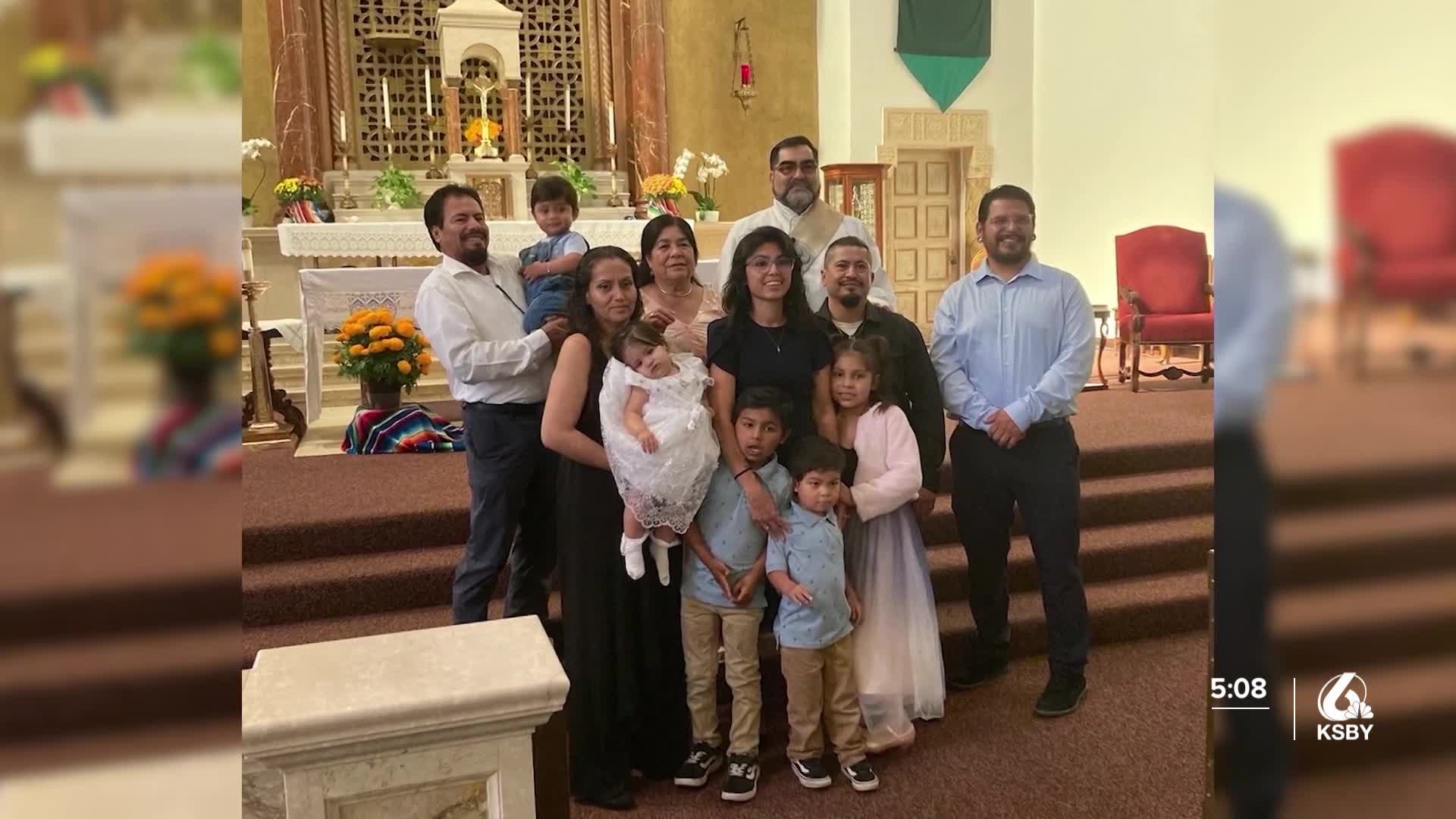
Juana Flores, a longtime Goleta resident and mother of an active-duty service member, was deported shortly before Thanksgiving after checking in with immigration authorities. Her daughter, Elizabeth Gastinel, says the family was left in the dark during the process.
“My sister ends up calling me, telling me like, ‘Hey, like, I can’t find her. She’s not in the system," Gastinel said.
Gastinel explained that the family struggled to get information about where their mother had been taken or when they would hear from her again.
“We didn’t really know what to do from there because we didn’t know if she was like out on the streets,” she said.
Gastinel says the family is now in contact with her mother, despite the distance and communication challenges.
“We all still try to call her every day,” she said.
Immigration attorney Kraig Rice, who represents Flores, says her case reflects how limited the options can be once a deportation order is carried out. Rice said Flores had an application for military parole pending at the time of her detention.
“We had a military, an application for military parole in place,” Rice said. “That’s an application for family members, mothers, for example in this case, of a service member.”
Under existing immigration statutes, Rice says it may take a long time before individuals who are deported can apply to return to the United States.
“She’ll have to stay out of the United States for ten years and then she can ask permission to reapply,” Rice said.
The PROTECT Military Families Act has not yet advanced to a vote and would need approval from both the House and Senate before it could become law.
Carbajal says he plans to continue advocating for the bill as Congress debates broader immigration policy and military family protections.
For now, Flores remains in Mexico, while her family continues to pursue legal and legislative options and speak out in hopes of preventing other military families from experiencing similar separations.
