

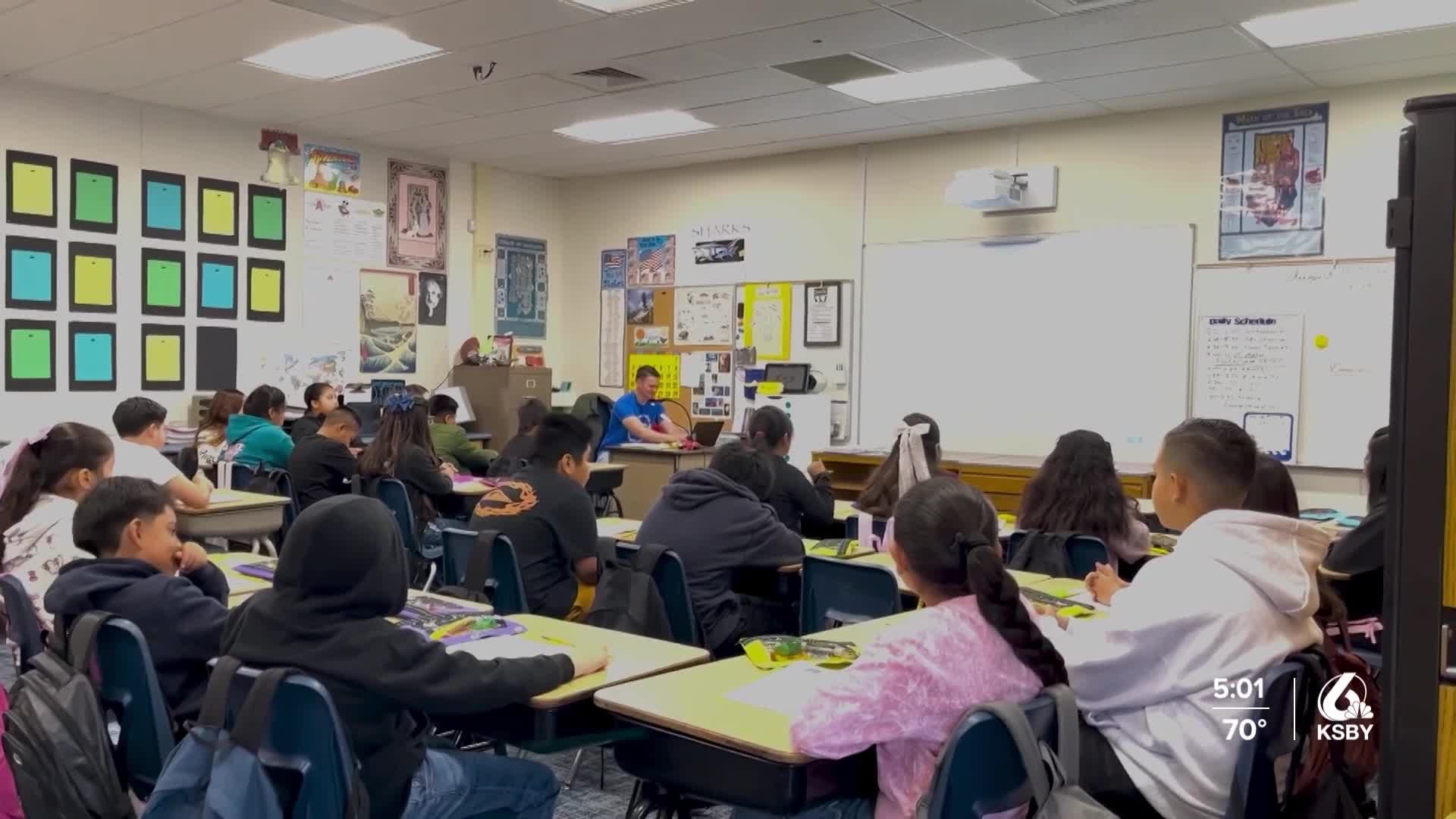



Nearly 9,800 students in Santa Barbara County experienced homelessness during the 2024-25 school year, with education officials saying much of that need is concentrated in North County.
According to Amy Willis, director of Transitional Youth Services with the Santa Barbara County Education Office, 9,783 students were identified as experiencing homelessness during the 2024-25 school year, representing about 14.2% of the county’s student population.
But education officials say student homelessness does not always look the way people might expect.
Under the federal definition used by schools, students are considered homeless when they lack a fixed, regular and adequate nighttime residence.
Willis said about 95% of Santa Barbara County students identified as experiencing homelessness are temporarily doubled up or sharing housing because of economic hardship or loss.
A smaller percentage stay in shelters, hotels or motels, while less than 1% are unsheltered.
“The greatest percentage of our students who are experiencing homelessness are not actually unhoused, but instead have housing instability,” Willis said.
According to Willis, 78.2% of the county’s students experiencing homelessness are enrolled in four North County school districts: Guadalupe Union School District, Orcutt Union School District, Santa Maria-Bonita School District and Santa Maria Joint Union High School District.
Willis said the concentration is particularly significant in the Santa Maria area, while noting those districts also educate a large share of the county’s students.
Education officials point to several factors that can push families into housing instability, including high housing costs, limited housing availability, wages that have not kept pace, job loss and unexpected physical or mental health crises.
For some families in the Santa Maria Valley, seasonal employment can create another challenge.
Sol Guerrero, homeless liaison with Fighting Back Santa Maria Valley, said she sees the impact among some local farmworker families during the slower agricultural season.
“From November to February, most of the farmworkers, they stop working because the season is over,” Guerrero said. “And they go to their car. So they go back and forth from the cars to hotels.”
Guerrero said outreach workers continue working with families during those periods, including helping children get to school from wherever their family may be staying.
Moving from place to place can also affect students beyond their housing situation.
“Mental health first and then attendance, because they’re moving from one point to another,” Guerrero said.
Willis said housing instability can make it harder for students to consistently get to school, complete homework and maintain relationships on campus. Students experiencing homelessness are also at greater risk of chronic absenteeism and frequently changing schools.
“If you think about what it takes for a child to be ready to learn, they need a good night’s sleep. They need a place in their home to do homework. They need to be able to consistently get to and from school,” Willis said.
Local schools and community organizations say they are working to remove those barriers.
Jose Segura, coordinator of Community Schools and Projects with the Santa Maria-Bonita School District, said the district works to address needs outside of the classroom that can affect a student’s ability to learn.
“So part of our job is to make sure that we can help families access the resources they need to help them overcome some of these insecurities, whether it’s food or housing or whatever it is,” Segura said.
Santa Maria-Bonita has three Family Resource Centers. Segura said the district also holds five food pantry events each month, serving about 700 to 900 families.
The district provides clothing distributions and works to connect families with community organizations when they need additional assistance.
One of those partners is Fighting Back Santa Maria Valley.
Edwin Weaver, Executive Director for Fighting Back Santa Maria Valley, said housing instability is not limited to families without employment. Some families are working but still cannot find housing that adequately accommodates them.
“They are out working very hard, but they don’t have adequate housing for their family size,” Weaver said. “So they’ll have a family of five renting a room.”
Fighting Back works with local schools and other organizations to connect families with housing and basic needs.
Willis said every school district has a homeless education liaison who can help families remove barriers to enrollment and attendance, find transportation solutions and connect with other resources.
She said those supports are especially important when other parts of a student’s life are unstable.
“When life outside of school is chaotic, is uncertain, it’s unstable, school can be a consistent place of stability and connection for students,” Willis said.
Families experiencing housing instability can reach out to their school district’s homeless education liaison for help with transportation, enrollment and connections to local resources.
