

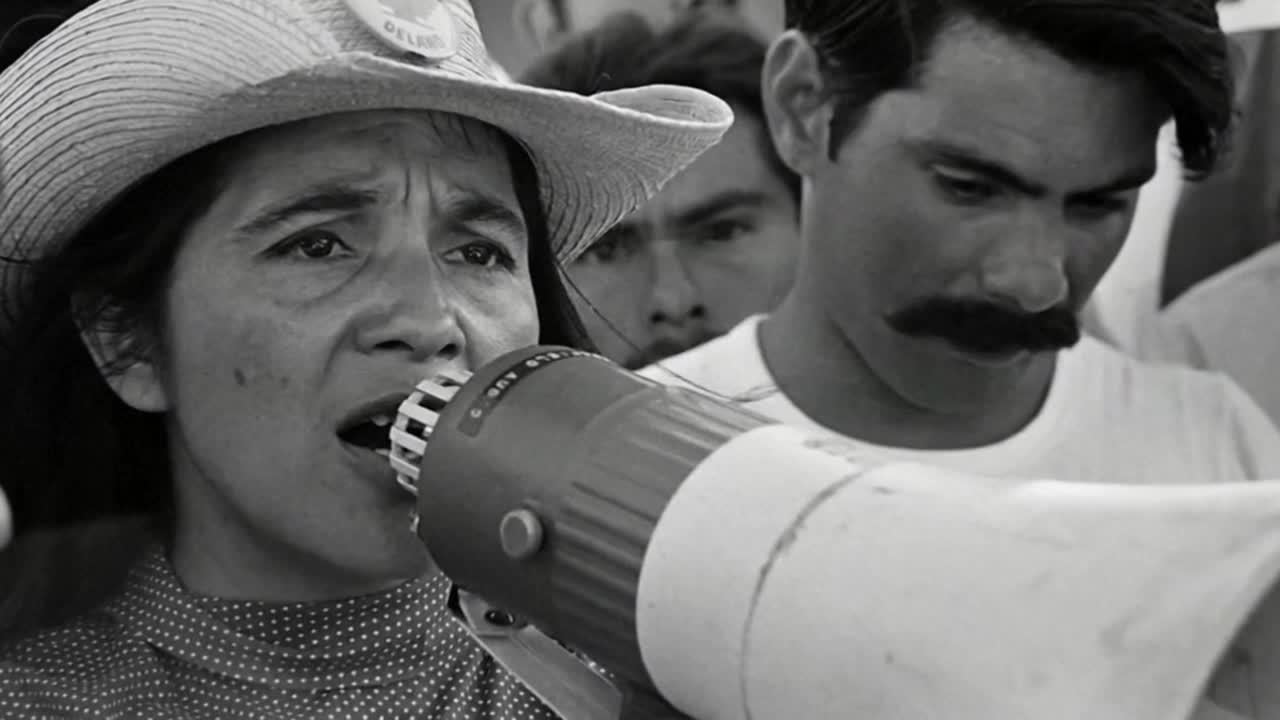



The death of civil rights activist and labor organizer Dolores Huerta is prompting people across northern Santa Barbara County to reflect on her decades of advocacy for farmworkers, including those who witnessed the movement firsthand.
Huerta died Wednesday, October 28, at her home in Bakersfield, surrounded by family. She was 96 years old.
Known for co-founding the organization that became the United Farm Workers alongside César Chávez and popularizing the phrase “Sí, se puede,” Huerta spent much of her life fighting for better wages, safer working conditions and greater protections for agricultural workers.
For Jesús Gonzalez, a former farmworker who arrived in the Santa Maria Valley in 1963, Huerta’s contributions are more than a chapter in history.
He remembers when Huerta and Chávez came to Santa Maria and Guadalupe to organize agricultural workers during the 1960s.
“Here in the Santa Maria and Guadalupe valleys, Dolores Huerta and César Chávez were here,” Gonzalez recalled in Spanish.
He described working in the fields at a time when basic necessities, including restrooms and clean drinking water, were not always available.
Gonzalez said the organizing efforts helped bring improvements to working conditions, particularly for women who faced additional difficulties without access to proper facilities.
“Things changed a lot because we finally had somewhere to use the bathroom, and there was more protection,” he said.
He also recalled participating in strikes in the Guadalupe area and said workers began receiving better treatment from agricultural employers as the labor movement gained momentum.
Huerta’s organizing efforts also helped shape community advocacy organizations that remain active on the Central Coast today.
Hazel Dávalos, Co-Executive Director of the Central Coast Alliance United for a Sustainable Economy (CAUSE), said Huerta’s approach to organizing continues to influence the nonprofit’s work.
CAUSE advocates for working-class communities, including farmworkers and immigrant families, throughout California’s Central Coast.
“For CAUSE, as an organization that organizes farmworkers in rural California, we use the house meeting model of the United Farm Workers,” Dávalos said. “It’s hard to imagine our organization without Dolores Huerta and the legacy she built.”
Dávalos explained that Huerta’s influence on the organization was also personal.
“Twenty-five years ago, when our organization was founded, she actually came to Santa Barbara to train some of our first organizers,” she said.
Dávalos said those early organizers later became mentors to her when she joined the organization as a teenager.
She credited Huerta with teaching the importance of empowering workers to advocate for themselves rather than relying on others to make decisions on their behalf.
According to Dávalos, that philosophy continues to shape how CAUSE approaches labor rights, economic justice and community organizing.
While many are remembering Huerta’s contributions to the labor movement, her death also comes amid renewed scrutiny surrounding César Chávez, her longtime organizing partner.
Earlier this year, Huerta publicly disclosed that Chávez had sexually abused her during the 1960s. Her account followed reporting detailing sexual abuse allegations against Chávez, including allegations involving teenage girls.
The revelations prompted renewed discussion about the history of the farmworker rights movement and how its achievements should be understood alongside allegations of abuse involving one of its most prominent leaders.
Francisco Ramirez, a mental health professional in the community who declined to appear on camera, described Huerta’s legacy as “very complicated.”
“What she did for the community was much needed,” Ramirez told KSBY News.
However, he said the allegations involving Chávez have left unanswered questions about the movement’s history and how its leaders are remembered.
The discussion highlights the different ways community members are processing Huerta’s death, from recognizing her contributions to agricultural workers to examining difficult aspects of the movement’s past.
For advocates like Dávalos, Huerta’s death also comes at a time when farmworker wages and working conditions remain important issues in Santa Barbara County.
Dávalos said CAUSE is continuing efforts to improve compensation for agricultural workers, including advocating for a countywide ordinance aimed at raising farmworker wages.
“We could be on the verge of passing a landmark countywide ordinance around raising farmworker wages,” Dávalos said.
She described the effort as one way local organizers hope to continue the work that Huerta helped establish.
For Gonzalez, who experienced the earlier farmworker movement firsthand, the rising cost of living remains a significant concern for agricultural workers.
“Everything is expensive, from rent to gas,” he said. “Right now, farmworkers are just working to pay rent, buy food and afford gas.”
Dávalos said Huerta’s death is especially meaningful as communities prepare to observe Día de los Muertos, a time when families honor loved ones who have died.
“We have the opportunity to add another powerful ancestor to our ofrenda this year,” she said.
She added that although Huerta is no longer alive, the work she helped inspire continues through generations of organizers and community advocates.
Following news of Huerta’s death, Governor Gavin Newsom ordered flags flown at half-staff in her honor.
Huerta was awarded the Presidential Medal of Freedom by former President Barack Obama in 2012 for her decades of activism.
Her family has requested privacy as they mourn and said plans to recognize and celebrate her life and legacy will be announced.
