

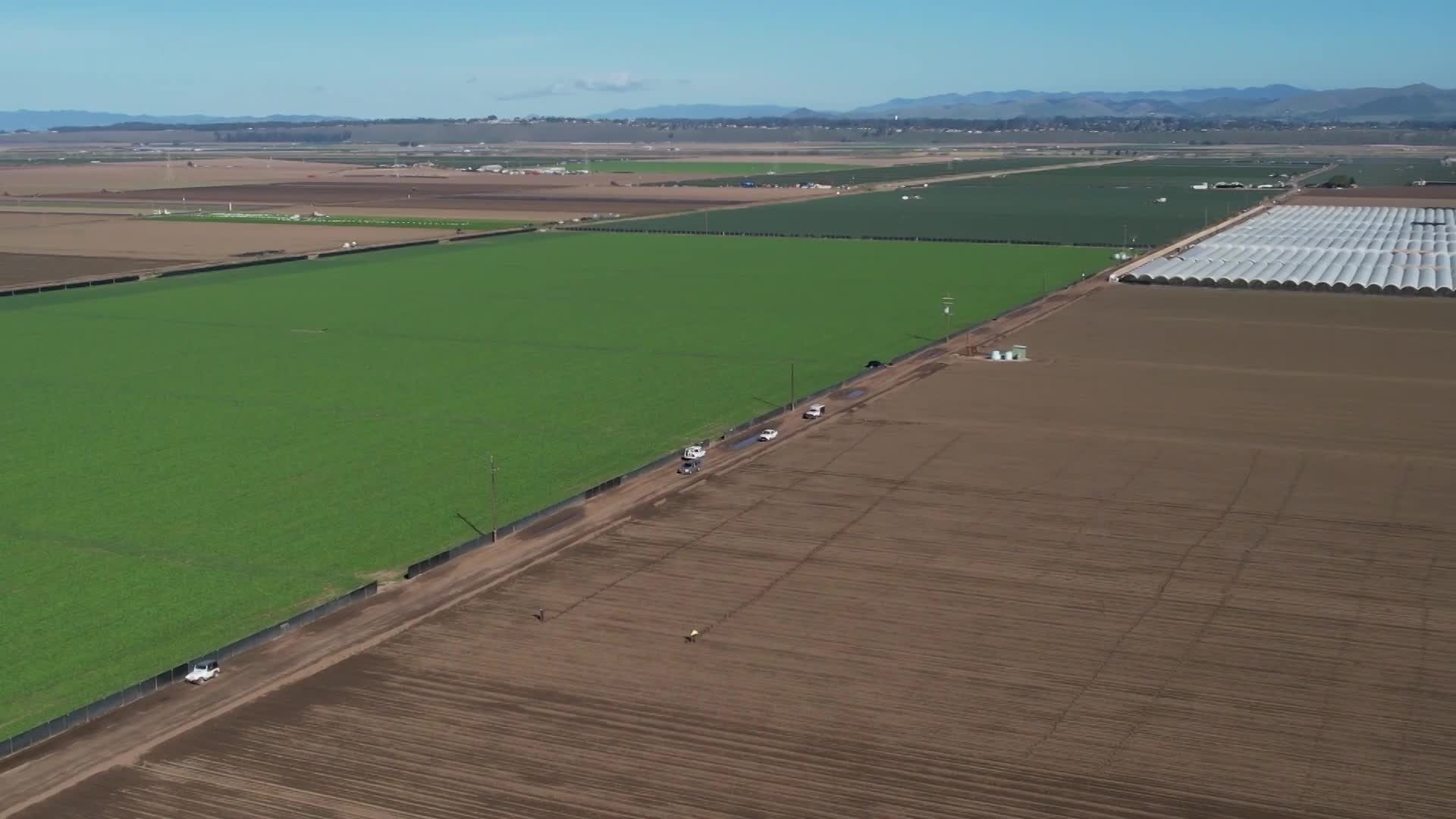



Farmworkers in Santa Maria were sent home early Wednesday after a worker reportedly passed out while crews were working through extreme heat near local fields.
KSBY spoke with Miguel Navarro, a farmworker and crew foreman, who agreed to an off-camera interview about what his crew experienced. Navarro said workers try to prepare for hotter days by wearing lighter clothing and are warned ahead of time when high temperatures are expected.
While KSBY was near fields along Main Street, fieldworkers said a worker had reportedly passed out because of the heat, and crews were then told to go home.
KSBY did not independently confirm the worker’s condition.
Navarro said working in the fields can be especially difficult in extreme weather, but his crew receives daily training on how to prepare for those conditions.
“Pues gracias a Dios tenemos entrenamiento. Yo soy el mayordomo de la cuadrilla, nos dan entrenamiento todos los días,” Navarro said.
He said he serves as the foreman of his crew and workers receive daily training.
Eric Ramirez, a policy advocate with Central Coast Alliance United for a Sustainable Economy, or CAUSE, said farmworkers often continue working despite extreme weather conditions.
"Farmworkers are out, you know, they're out working," Ramirez said. "They're making sure that we get to enjoy at a dinner table or at a party, right. So I think that really speaks to the level and conditions that farmworkers have to endure to make ends meet here in the county."
Ramirez said his organization has heard concerns from workers about the conditions they face during particularly hot days, including access to drinking water.
“It’s required by law to have cold, refreshing water,” Ramirez said. “Oftentimes farmworkers report that the water is warm," adding, "oftentimes farmworkers report that the water is warm, you know, lukewarm at best."
He said CAUSE has also heard from workers who say they are not always able to take the breaks they need while working in the fields.
"We also heard that folks, you know, often don't get the chance to take the required breaks that they need because of this prioritization of the crop," Ramirez said.
He also noted growers can face pressure to harvest crops before they over-ripen or are damaged by the heat, but argued that worker health should not come second.
"Oftentimes farmworkers' health is kind of left second," Ramirez said. "Employers and growers, their priority is making sure that their assets, their crops, are being harvested."
California’s outdoor heat illness prevention rules require employers to provide workers with access to drinking water and shade. Once temperatures reach 95 degrees, additional high-heat requirements take effect. For agricultural workers, employers must ensure workers take at least a 10-minute preventative cool-down rest every two hours. Employers must make sure those breaks are actually taken.
Ramirez said the challenge is balancing the pressure to harvest crops with protecting the people doing the work.
Navarro said preparation helps his crew deal with the conditions, but Wednesday’s early end to the workday underscored how quickly extreme heat can affect those spending hours outside.
