

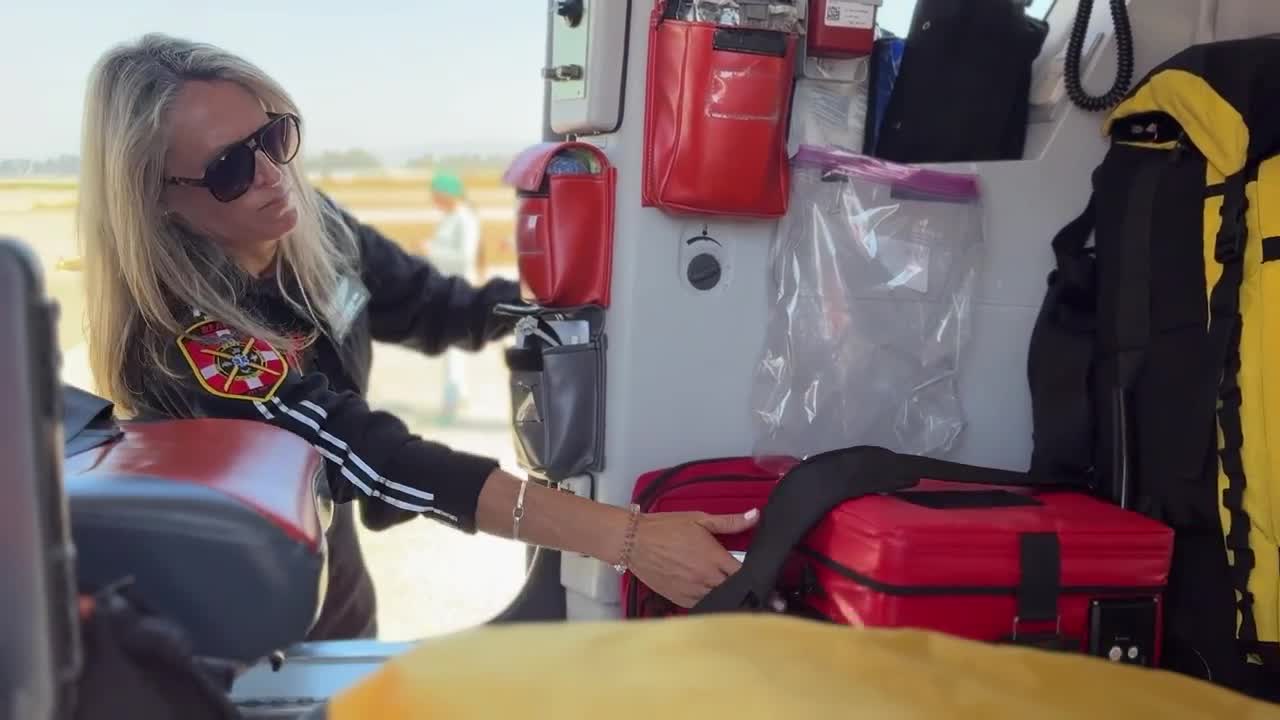



Santa Maria-based REACH 38 air medical crews will now carry blood on board their helicopter, allowing them to begin transfusions before critically injured patients reach the emergency room.
The program is a partnership with Houchin Community Blood Bank, which delivered its first batch of units to the Santa Maria base on Tuesday.
REACH 38 responds across Santa Barbara, San Luis Obispo and Kern counties, including car crashes and other trauma calls where patients may be losing blood before they ever reach a hospital.
Dennis Rowley, Program Director for REACH 38, said the ability to have blood available on scene is critical to patient survival.
"Blood carries oxygen and the more that they lose blood, the less oxygen back to their vital organs like the brain, the heart, the lungs, and being able to have that product on scene is very important for the outcome for the patient," Rowley said.
Amandeep Basra, Director of Quality, Compliance and Regulatory Affairs at Houchin Community Blood Bank, said the partnership goes beyond simply supplying blood.
"We are providing another tool for critical care. We are not delivering blood, we are delivering time when time means a life," Basra said.
REACH 38 will keep four units in its inventory at all times, and Houchin will replace any that are used. Keeping that supply available also means tracking each unit before it gets too close to expiring.
Parker Duncan, Director of Technical Operations at Houchin Community Blood Bank, said the two organizations will work together on an exchange schedule to make sure no blood goes to waste.
"What we want to do is partner with REACH on an exchange schedule. We'll take the units, we'll provide it to them for a couple of weeks and then when it gets closer to the end of life, we'll take it back from REACH and we'll take it to one of our hospitals, so they'll have a higher chance of utilization," Duncan said.
Duncan said the blood has a shelf life of about 28 days. He said getting to this point took months of work, including making sure REACH had the proper storage equipment validated and ready to go.
Blood will be carried on every flight, with unused products returned to the blood bank so they can still be used elsewhere.
Rowley encouraged community members to consider donating blood to support the program.
"Think about the people that need it and if you're out there and you think you would be one of those people that would like to donate, I would just encourage it. It's just a really great thing and it's very helpful for the type of work that we do," Rowley said.
