

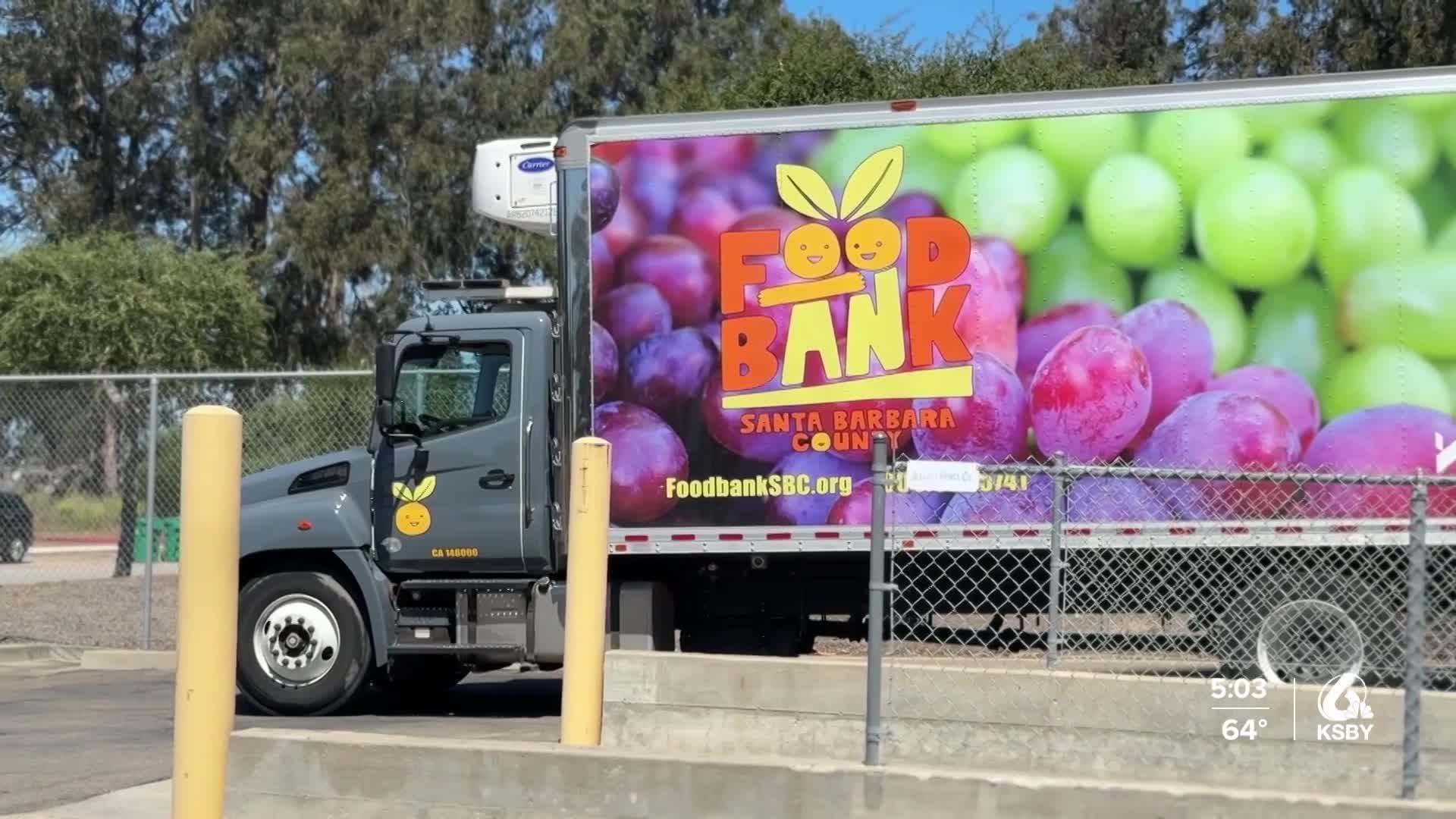



Rising gas prices are beginning to impact more than just drivers on the Central Coast, they’re now putting pressure on essential services, including food distribution.
At the Foodbank of Santa Barbara County, staff say the cost of fuel is becoming a growing concern as trucks and vans travel across the county daily to deliver food to families in need.
“We have trucks and vans doing drop-offs and pick-ups throughout the county, so we could go as far from Santa Maria to Santa Barbara,” said Laurel Alcantar, the organization’s marketing director.
That travel is essential, but increasingly expensive.
Alcantar says the organization has seen about a 25% increase in fuel usage in recent weeks, adding new pressure to day-to-day operations.
The cost is especially evident at the pump. According to the food bank, some diesel trucks can cost around $500 for just three-quarters of a tank, while vans can run about $120 to fill up with regular gas.
While the organization says it has been able to manage those costs so far, leaders are already preparing for what could come next if prices remain high.
“Some of the options that we have looked at would include more centralized distributions… and then moving some of our drive distribution sites to a walkup model,” Alcantar said.
Any shift like that could change how food reaches communities across Santa Barbara County.
At the same time, rising gas prices are also affecting the people the food bank serves.
“For families already feeling the pressure of, like, a fixed income, paying two, $300 more a month just to get back and forth to work… can have a devastating impact on a household budget,” Alcantar said.
Experts say the rise in gas prices is not just a local issue — but part of a larger global system.
“Gas prices are set globally. People sometimes think we’re insulated, but actually, the prices are not set locally,” said Kate Gordon, CEO of California Forward and a former federal energy advisor.
That global pricing structure means events overseas, including disruptions in key oil transit routes, can directly impact what Californians pay at the pump.
California is particularly vulnerable compared to other states. The state relies heavily on imported oil and has limited refining capacity, making it more exposed to supply disruptions.
Gordon noted that a significant portion of oil imported to California comes from the Middle East, with shipments moving through the Strait of Hormuz, a critical global shipping route now facing ongoing disruptions.
Those disruptions can ripple through the economy — not only increasing gas prices, but also driving up the cost of transporting goods, including food.
For food banks, that creates a difficult situation: as costs rise, so does demand.
“More and more people are using food banks because their own budgets are stretched. Those food banks are super cost sensitive. Their work is getting more expensive while more people need them,” Gordon said.
Back in Santa Barbara County, the food bank says it remains committed to serving the community — but acknowledges the challenges ahead.
If gas prices continue to rise, the organization may need to adjust how and where it distributes food to remain sustainable.
For now, leaders say they are closely monitoring costs, while continuing to meet the growing need.
