

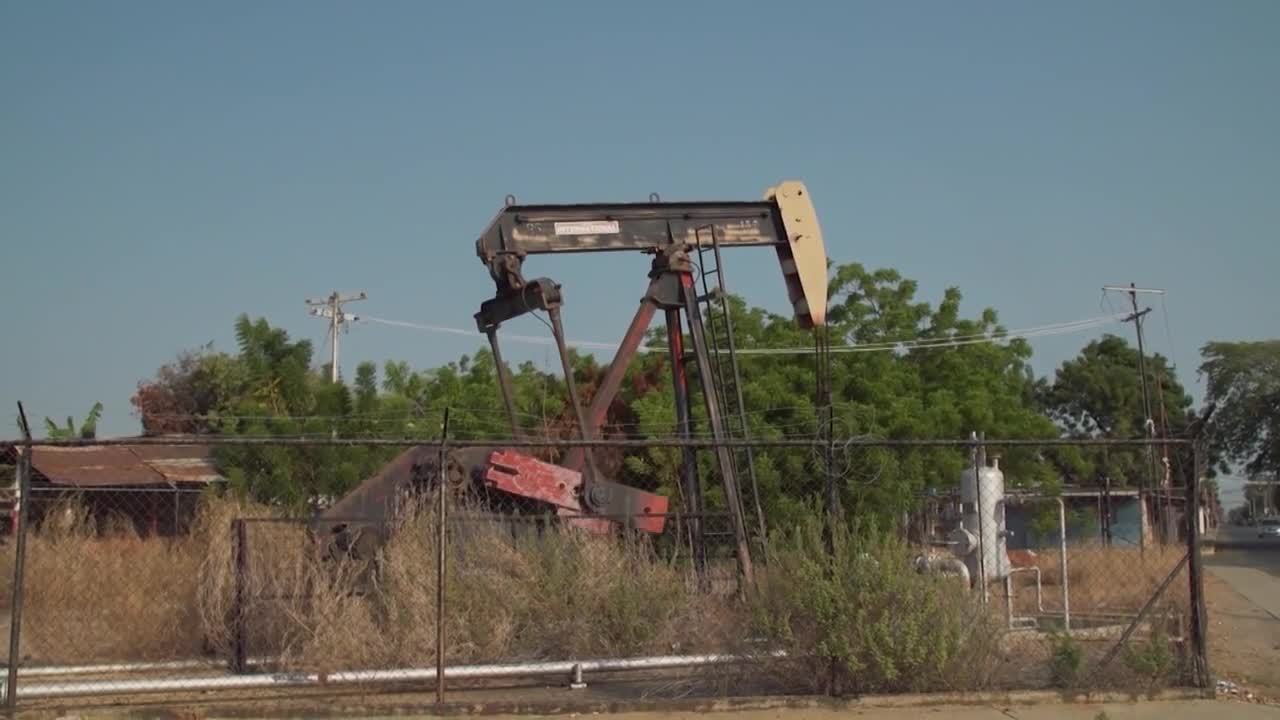



SANTA BARBARA — The Santa Barbara County Board of Supervisors voted 3–2 Tuesday to advance an ordinance prohibiting new onshore oil and gas wells in unincorporated areas of the county.
Supervisors Roy Lee, Laura Capps and Joan Hartmann supported the ordinance. North County supervisors Bob Nelson and Steve Lavagnino voted against it.
The ordinance is the first phase of a broader county effort to eventually phase out onshore oil and gas production. However, this initial action would not immediately close existing operations.
“The ordinance that was just passed yesterday is phase one, and what that does is it prohibits any permits for a new oil and gas well,” said Haley Ehlers, Executive Director of Climate First: Replacing Oil and Gas (CFROG). “That does not impact any existing operations, so it doesn’t shut down existing oil and gas operations.”
Ehlers said companies may still be able to pursue production from certain existing idle or nonproductive wells. Operators may also sidetrack existing wells, a process that allows them to drill in a different direction from an established well.
Ehlers said Santa Barbara County has not approved a significant new oil-well project or new-well drilling since 2014. She described the ordinance as maintaining the county’s current trajectory while creating a formal policy against expansion through entirely new wells.
Supporters argue that limiting additional drilling will help reduce pollution and protect communities located near oil and gas operations.
Paasha Mahdavi, an associate professor at UC Santa Barbara, studied the potential effects of transitioning away from onshore oil production in the county.
“Forty percent of oil and gas wells in Santa Barbara County are within one mile of sensitive areas like schools, hospitals, homes,” Mahdavi said.
He said phasing out operations over time could reduce residents’ exposure to pollutants associated with oil and gas production, including particulate matter.
Mahdavi said the supervisors’ vote “sent a message that it is preparing for a clean energy future” and could make Santa Barbara County “a role model for communities around the world.”
He also contrasted the county’s decision with President Donald Trump's administration’s support for expanding fossil fuel production.
“So Trump is betting on a fuel of the past,” Mahdavi said. “The rest of the world is moving toward a fuel of the future.”
Opponents argue the county’s policy could discourage companies from investing in their existing facilities, threaten well-paying jobs and disproportionately affect North County communities, where the county’s onshore oil production is concentrated.
Nelson represents the Fourth District, which includes Orcutt, Los Alamos, Vandenberg Village, Mission Hills and portions of Santa Maria and the Lompoc Valley.
“Oil and gas in the North County has been a long part of our history,” Nelson said. “You know, Orcutt, after all, is named after an oil geologist and so that’s part of who we are here.”
Nelson said his concern extends beyond the immediate prohibition on drilling new wells. He believes preventing companies from expanding could discourage them from continuing to invest in their existing North County operations.
“When you say to an oil company that you can no longer invest in your company and grow, it sends a really bad message on how they are hoping to operate in the future,” Nelson said.
He also expressed concern about the potential loss of jobs that allow workers to support their families and remain in the region.
“Many of our head-of-household jobs are really in the gas industry,” Nelson said. “These are important jobs. We don’t have a lot of jobs to spare here.”
Nelson said that if those jobs disappear, some workers may be forced to leave Santa Barbara County to find comparable employment elsewhere.
Mahdavi acknowledged that a transition away from oil and gas could affect workers, especially those living in North County. He said government officials would need to actively help those employees move into other industries.
“We do feel and see the impacts on workers, especially in North County,” Mahdavi said. “And it is incumbent upon government to create a pathway to transition the workforce into these clean energy jobs or jobs in other sectors that exist across the economy. But again, it’s not going to be automatic.”
Mahdavi said his research found that oil and gas employment in the county has already been declining because of broader changes within the industry, not because of a local phaseout that has yet to be implemented.
“This is before a phaseout, right?” Mahdavi said. “And so this is what’s interesting to note is that there has been a shrinkage of employment opportunities for oil and gas workers because of these macro trends across the industry.”
He said researchers found that some workers who lost those employment opportunities ultimately left Santa Barbara County.
The county’s proposed second phase would examine how to gradually end production at existing onshore oil and gas facilities. That process would require additional studies and environmental review before supervisors could consider another ordinance.
Ehlers said the potential phaseout would take place over decades, rather than forcing existing facilities to close immediately.
“That phaseout is not likely to shut operations off the next day,” Ehlers said. “What we’re seeing is like a 20- to 30-year schedule of that phaseout.”
County staff has estimated that studying the potential phaseout and completing the required environmental review could take approximately three years.
The ordinance banning new wells must return to the Board of Supervisors for a second reading before it is formally adopted. Portions affecting the county’s coastal zone would also require approval from the California Coastal Commission.
