

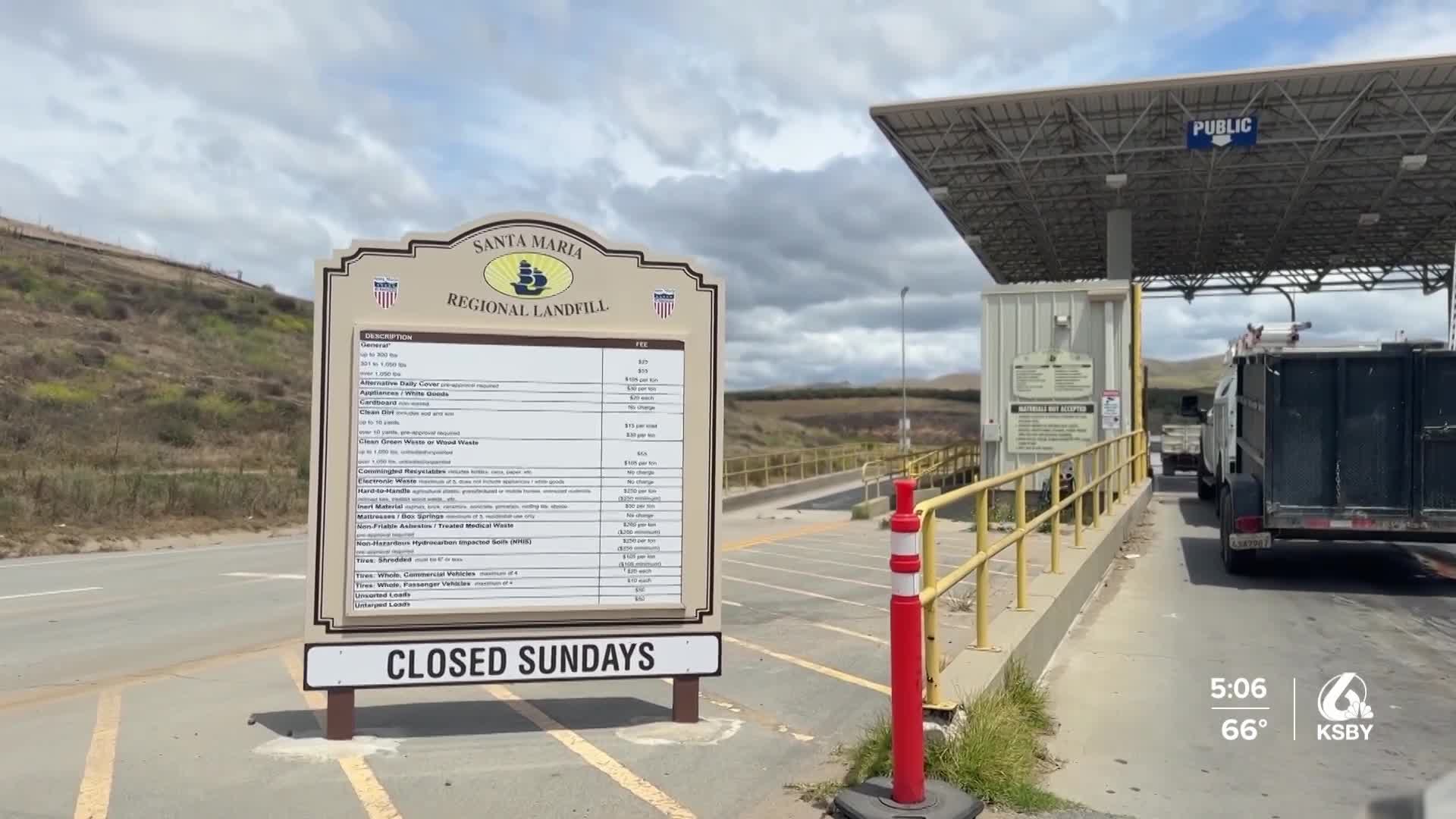



The Santa Maria City Council voted 5-0 Tuesday night to approve solid waste rate increases through 2029, affecting more than 20,583 customer accounts citywide, including single-family homes, apartment complexes, and businesses.
"About a year and a half ago, the city initiated a cost-of-service study for solid waste collection with various state mandates like SB 183 and AB 1826. We have increasing regulations that are impacting operations. We have future fleet needs and we have rising processing costs for the waste streams," said Michelle Ruiz, who works in the city's Utilities Department.
City documents also point to rising costs connected to organics processing, recycling, and insurance as additional factors in the rate adjustments.
The rate plan includes four consecutive increases beginning in 2026. However, many single-family residential customers with cart service will not see their first increase until 2027 as part of a phased approach.
"Somebody with a 90-gallon cart service would see an increase in 2027 from today and next year of about $2.82," Ruiz said.
Santa Maria resident Jackie Scolari said she received a notice about the rate increase in her recent utilities bill.
"I pay $75 and something. I think it's every two months, and the rate increase isn't that large, and I know that gas has been increasing, so I understand the increase," Scolari said.
Still, Scolari said she is watching to see whether her bill will ever come back down.
"My concern is when gas goes down, I'm going to be looking to see if it goes back down," Scolari said.
Not all residents are as accepting of the change. Michael Zubiate, who lives at Villa Del Sol, a senior community in Santa Maria, said the increases would have a significant impact on him.
"I'm on a fixed income so it would affect me tremendously, you know, so I would... I wouldn't really go for that increase at all really," Zubiate said.
Zubiate said he had not previously heard about the rate increases.
"This is the first I heard of it," Zubiate said.
Seven written protests were submitted ahead of Tuesday's vote. More than 10,292 written protests would have been needed to stop the rate increases from moving forward.
