

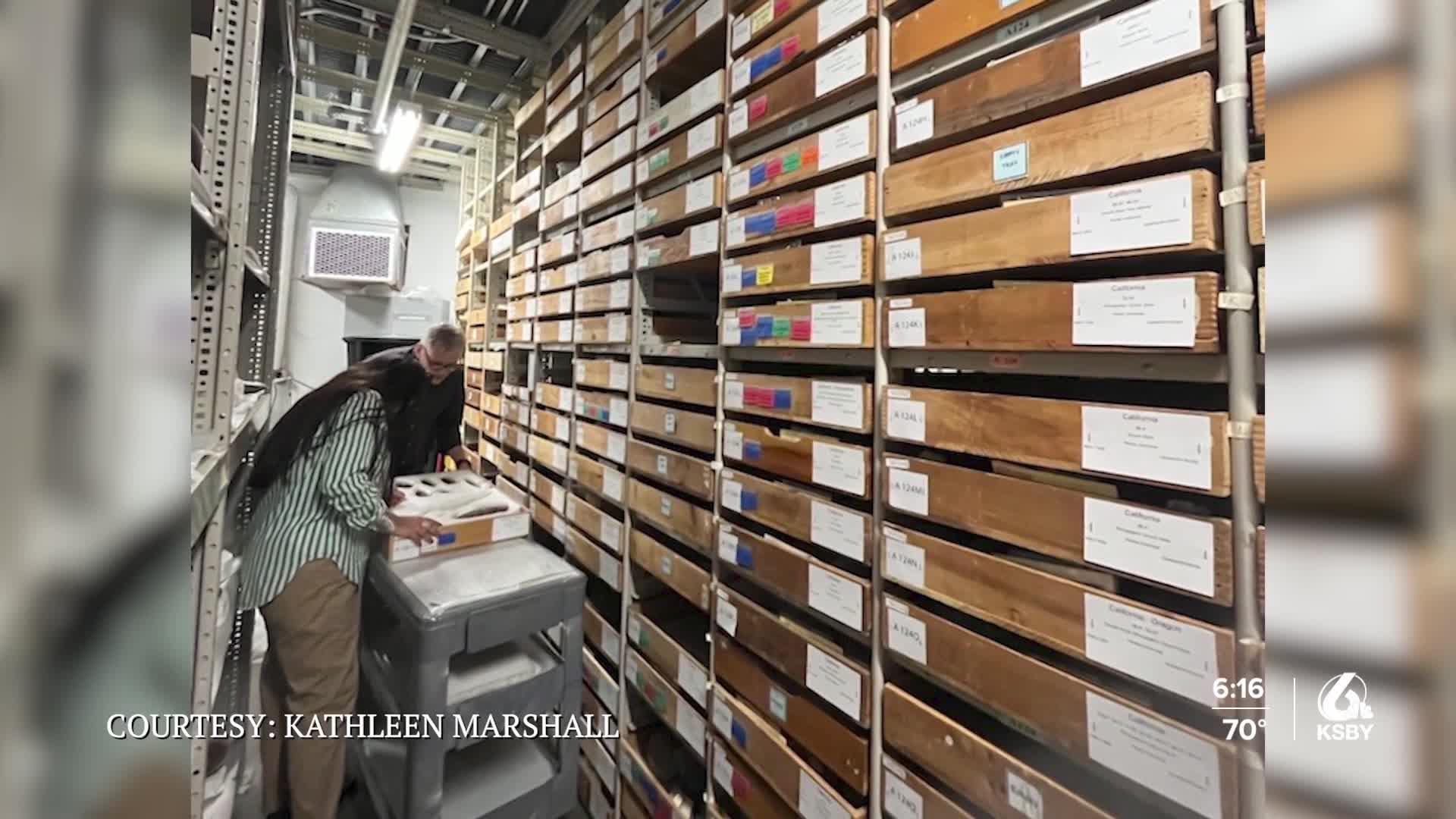


After generations away from their homelands, approximately 167 Chumash ancestors and more than 2,000 cultural items have returned to the Santa Ynez Valley from collections held by Harvard and Yale.
The ancestors and cultural belongings are under the care of the Chumash Elders Council and the tribe. While they were brought back to Santa Barbara County, tribal leaders say the return represents far more than the transfer of museum collections.
For Kathleen Marshall, the Native American Graves Protection and Repatriation Act (NAGPRA) representative for the Chumash Elders Council, the moment marked the culmination of years of work.
“About four years ago, I started working with Harvard Peabody Museum,” Marshall said. “Actually, about 20 years ago, I took a visit there, with the museum advisory committee just to look at items. And actually, we were there to maybe get some items loaned to us.”
Marshall said Harvard held a large collection connected to the Chumash community, including approximately 167 ancestors.
“They have a very large collection. And they had our ancestors there about 167 ancestors,” Marshall said. “And so we began this journey four years ago working on repatriation. It was a long journey, and there was a lot of hard conversations.”
She said the process was often complicated by turnover in museum leadership.
“Unfortunately, they did go through a lot of directors there,” Marshall said. “So every time I returned, it was like telling my story over and over.”
Still, Marshall said the relationship between the tribe and Harvard evolved during the process.
“I believe that we created a transparent and a genuine relationship with Harvard,” Marshall said. “Like I said, it was difficult at first, but they really began to understand that the knowledge that our people have and the connection that we have to these items and clearly to our ancestors, was so important to us.”

For Marshall, the repatriation is ultimately about healing.
“And not just important, but healing, receiving these items back, receiving these ancestors back, and then putting them back in the ground where they came from,” Marshall said. “These ancestors and their belongings have already had their ceremony. They’ve already had their time. And bringing them back is so important for our healing journey. Unfortunately, they were stolen from their spot of rest.”
Marshall said changes to federal repatriation regulations in 2024 helped accelerate the process. The revised NAGPRA rules require federally funded institutions to consult with tribes and place greater emphasis on tribal knowledge when determining cultural affiliation.
“In January 2024, the NAGPRA law got revised,” Marshall said. “In 1990, this law was passed. However, it didn’t have any teeth to it, right? There was no fine. So nobody was really doing repatriation.”
She said the updated regulations made consultation a requirement rather than a suggestion.
“It told. It read that you had to consult with tribes and that tribal knowledge, that was the answer,” Marshall said. “And that if you had any ancestors or human remains, you were to contact the federally recognized tribes that those items were affiliated to.”
Marshall said the revisions have helped ensure tribes play a central role in decisions involving their ancestors and cultural belongings.
“It relies on tribal knowledge. It relies on what we know is right,” she said. “And it has opened the doors to doing repatriation in the right way, ethically, morally.”
The work required repeated trips across the country.
“It was very frustrating at the beginning, but I knew that I had to be consistent. I knew that I had to follow this through,” Marshall said. “I saw the magnitude of this collection, and I knew that something had to be done.”
Those visits were often emotional.
“It was always hard leaving. It was always hard leaving my ancestors. It was always hard leaving the artifacts,” Marshall said. “Because the first time I went there, I promised them that I would bring them back.”
The collection includes both ceremonial and everyday objects once used by Chumash people.
“We had really everyday use of what our ancestors used. We had arrowheads,” Marshall said. “We have in this specific collection, we got flicker banners, which are ceremonial. These are feather banners that our people used in ceremony, which we would like to use again.”
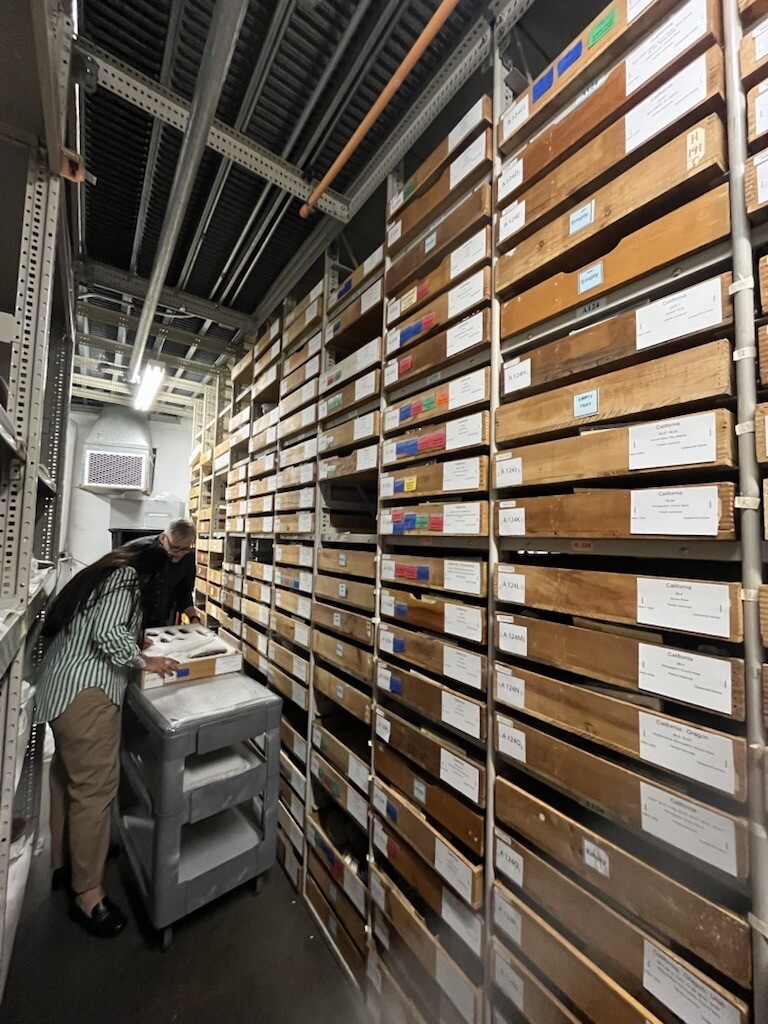
“There are beautiful baskets that came back,” she continued. “There’s just, you know, there’s beautiful pipes, there’s bird whistles, there are deer whistles. This was a beautiful collection that Harvard had there.”
Marshall said many Chumash ancestors were traditionally buried with their belongings, making burial sites targets for collectors.
“What we know about our peoples, we were buried with all of our belongings,” Marshall said. “So we were a top priority for these looters. They knew that. They knew where to go.”
Marshall specifically pointed to Stephen Bowers, a 19th-century collector whose collections remain scattered across institutions throughout the country.
“Unfortunately, there was a man named Stephen Bowers who came to our area, is a well-known looter,” Marshall said. “And so he sold a lot of it to Harvard Peabody.”
Marshall said stories passed down through the community describe efforts by Chumash ancestors to protect burial grounds from collectors.
“We have a story where he came to our village here in Santa Ynez, and our ancestors stood out front with pitchforks and stopped him from coming to the cemetery,” Marshall said. “They had heard that he was coming, so it was well known that people were stealing from our cemeteries.”
She said Bowers’ collections remain in museums across the country.
“Stephen Bowers collections are everywhere. They’re everywhere,” Marshall said. “They’re at the Smithsonian. They’re at the American Museum of Natural History in New York. They are everywhere.”
The homecoming itself was emotional.
Marshall traveled to Harvard to oversee the transfer and watched as the collection was loaded into a semi-truck bound for California.
“I headed out to Harvard on a Monday and the truck, the semi truck came on a Wednesday,” Marshall said. “And just being able to see the magnitude of this collection in crates and in boxes and watching the truck being filled up, knowing that they were coming home, it just brought tears to my eyes.”
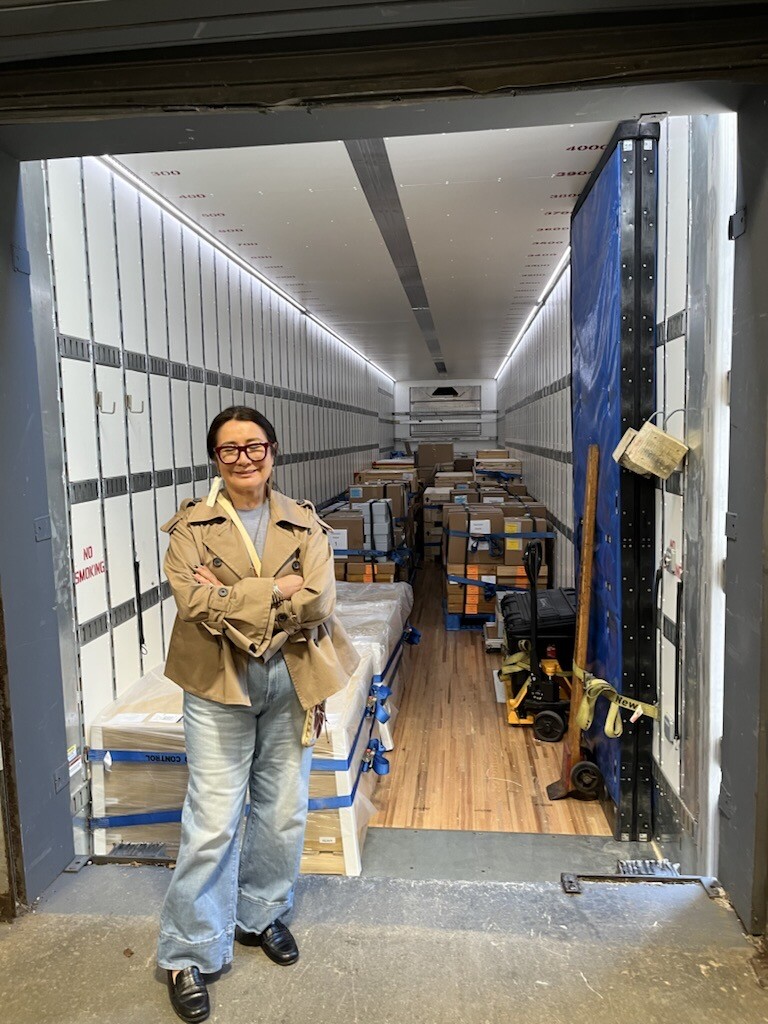
Marshall said representatives from both Harvard and Yale were present.
“Even Yale and Harvard, they were there. They were present. Yale came down because we were at Harvard,” Marshall said. “And just the emotions that you could see from them, too. So that also proved to me that that relationship was genuine. They knew the healing that was going to come from that.”
She tracked the truck’s journey back to Santa Ynez every step of the way.
“I was able to GPS the semi truck all the way here, and I was checking it every hour,” Marshall said. “And when I woke up, it’s the first thing I did was look to see where the truck was.”
When the truck arrived, community members gathered to welcome the ancestors and belongings home through song.
“When we arrived here, we gathered as a community and we sang the semi truck and we sang in our artifacts that had been missing from this area,” Marshall said.
Some of the items had been away from their homeland for nearly 150 years.
“One of the first collections that went to Harvard was in 1877,” Marshall said. “So they’ve been sitting there for that long without a Chumash person touching, singing to them. It was very emotional.”

The next step is reburial.
“It’s our belief that our ancestors were buried with their belongings,” Marshall said. “So they were not used again, and they were not seen again. So the burial items will be reburied.”
Because many historic burial sites are now occupied by roads, freeways and development, Marshall said the tribe will work to rebury ancestors as close as possible to where they originally rested.
“Unfortunately, we can’t bury them where they were taken because there’s freeways, there’s roads, there’s houses on these cemeteries now,” Marshall said. “So we will bury them as close as we can.”
She said the tribe is working with organizations including UC Santa Barbara and the National Park Service to identify locations for future reburials.
“That means working with institutions such as UCSB,” Marshall said. “They have given us a plot of land where we have had burials before, and they have opened that door for us to be able to do a future reburial.”
Marshall said reburials often bring together Chumash communities from across the region.
“It has been beautiful and healing,” Marshall said. “I have witnessed that reburial communities come together. There is no tribal politics involved in reburial of our ancestors. This is a moment for them to be back in the Mother Earth. This is a moment for us to heal.”
Although the tribe has sought the return of ancestors and cultural belongings, Marshall emphasized that repatriation does not mean Chumash history disappears from museums.
“We want to be in people’s museums. We want to be in exhibits,” Marshall said. “We want to educate people on who we are, where we came from, what we do, our everyday life and where we’re at and we’re still here.”
Marshall said the tribe left eight baskets at Harvard on loan so they can remain part of educational exhibits.
“We left eight baskets there on loan. We own them. They are loaning them from us now, which feels really good to say,” Marshall said.
While the return from Harvard and Yale marks a major milestone, Marshall said her work is far from over.
“Next on my mission is we have a long list, to be honest with you,” Marshall said. “So next on my list is we’re going to the Smithsonian in D.C. I’ve been working with them for the last three years.”
Marshall said she is also working with the American Museum of Natural History in New York and the Field Museum in Chicago on future repatriation efforts.
“Those are my next three big repatriations,” Marshall said. “And then, of course, reburial has to happen in between. And that’s the healing part.”
She said she hopes the success of the Harvard and Yale repatriations encourages other tribes to pursue similar efforts.
“I would really like this experience to really encourage tribes to know that this is possible,” Marshall said. “This was a huge endeavor with very large institutions, and it’s important that this message is heard, that this can be done and that we have the knowledge.”
Marshall said the revised regulations have helped tribes reclaim a role in decisions involving their ancestors and cultural belongings.
“It is not an archeologist. It is not a non-native making these decisions on what we get back,” Marshall said. “It is now our decision and it is in our hands.”
For Marshall, bringing the ancestors home is not the end of the journey, but the beginning of healing.
“It means being able to move forward. It means knowing that there are people out there that will do the right thing,” Marshall said. “And it’s time. It’s just time to do the right thing. It’s time to allow our people to heal.”
“I don’t think we’ll be healed 100%,” she added. “But I think this really begins that path, and I really hope other institutions follow suit.”
