



Unrelenting Iranian attacks on shipping traffic and energy infrastructure pushed oil above $100 a barrel Thursday, as American and Israeli strikes pounded the Islamic Republic with no sign of an end to the war in sight.
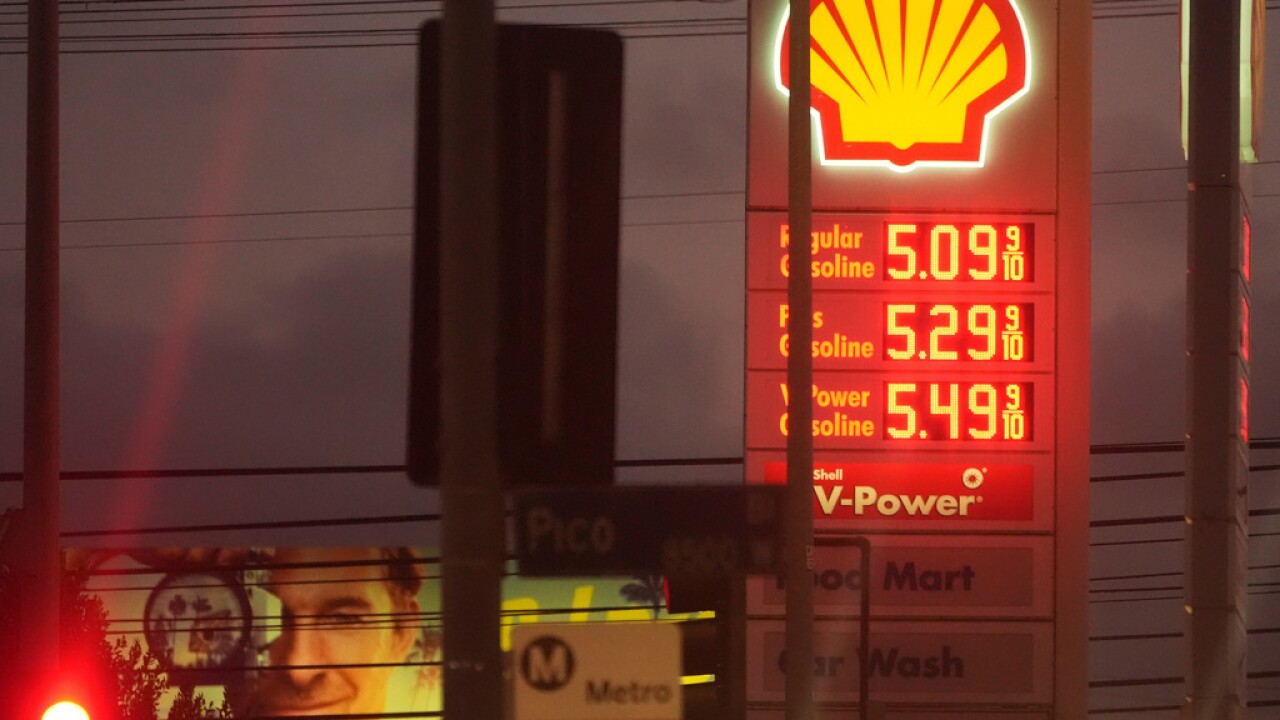
This has caused gas prices to spike by 55 cents per gallon in the U.S. over the last month, according to AAA.
Iran hit a container ship off the coast of Dubai, caused a blaze near Bahrain's international airport, targeted a major Saudi oil field with a drone and forced Iraq to halt operations at all of its oil terminals after attacking its port of Basra on the Persian Gulf.
RELATED STORY | Gas at $3.53 a gallon: Are EVs more affordable?
Iran flouted a U.N. Security Council resolution from the previous day demanding that it halt strikes on its Gulf neighbors, with new attacks also reported in Kuwait and the United Arab Emirates.
Sirens wailed before dawn in Jerusalem as Israel intercepted incoming Iranian missiles, and loud booms were heard later in the day in another attack on the city.
Israel launched a “wide-scale wave of strikes” on Tehran and in Lebanon, where Israel says it is targeting Iran-linked Hezbollah militants, 11 people were killed in two early morning strikes.
Since the United States and Israel started the war with a Feb. 28 attack on Iran, Tehran has focused on inflicting enough global economic pain to pressure them to halt their attacks.
U.S. President Donald Trump suggested that was not imminent, however, promising to “finish the job” even though he claimed Iran is “virtually destroyed.”
“We don’t want to leave early do we? We’ve got to finish the job," he said at an event Wednesday in Kentucky.
Iranian Supreme Leader Ayatollah Mojtaba Khamenei hasn't yet made a statement or been seen since being chosen to succeed his father Ayatollah Ali Khamenei, who was killed in the opening day of the conflict. But Iranian President Masoud Pezeshkian suggested online Thursday that for the war to end, the world would need to recognize Iran’s “legitimate rights," pay reparations and offer guarantees against future attacks.
In addition to attacking energy infrastructure around the region, Iran has a stranglehold on the Strait of Hormuz, the waterway leading from the Persian Gulf toward the Indian Ocean through which a fifth of the world's oil is transported.
RELATED STORY | EV buyers lose $7,500 tax break; automakers offer workarounds
Amid speculation that the U.S. might target Kharg Island in the Persian Gulf, Iran’s main oil terminal, Iran's parliamentary speaker threatened that any attempt to take Iranian islands would “make the Persian Gulf run with the blood of invaders.”
“The blood of American soldiers is Trump’s personal responsibility,” Mohammad Bagher Qalibaf added in a social media post.
With traffic in the strait effectively stopped, the price of Brent crude oil, the international standard, rose another 9% to more than $100 a barrel, up some 38% over what it cost when the war started.
