

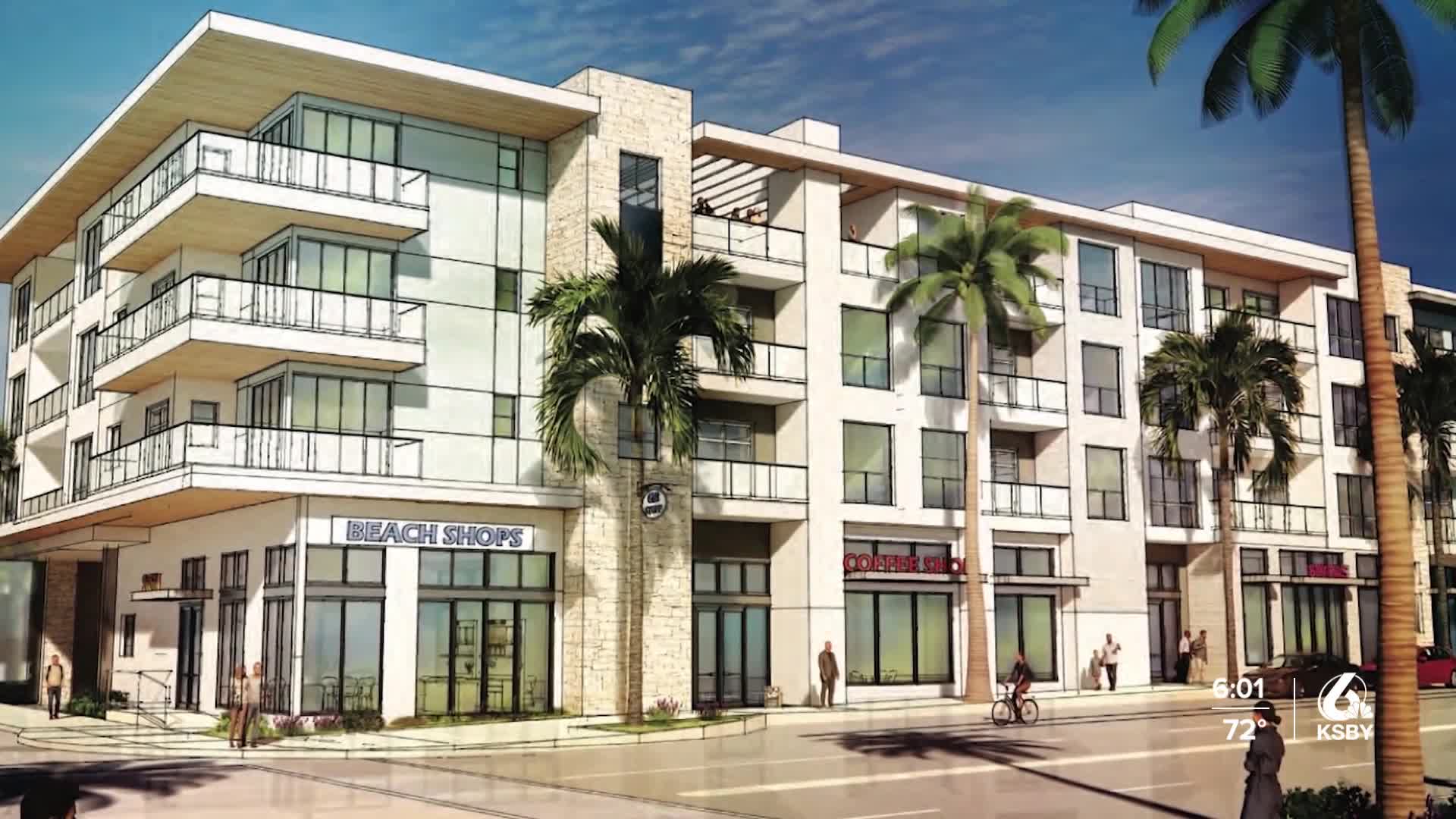



Businesses at the Beachfront Plaza were preparing to leave as plans for a multi-story building moved forward almost a year ago in Grover Beach. Now, the planning commission is deciding whether to approve the project and one statewide nonprofit says they may not have a choice.
The four-story, mixed-use development by Coastal Community Builders could include three businesses and 39 homes.
It's part of an ongoing debate among Grover Beach leaders and residents over growth in the city, and it’s a pretty even split among residents. In the city’s 2025 community survey, 28% responded in support of growth, while 27% disagreed.
Manuel Reyes said he’s seen a significant change in the city since he moved here 25 years ago.
“[It's like changing] from day to night," Reyes said. "Everything was pretty nice, small town. I mean, none of these tall buildings [were] going on, but that's been a change.”
This vote goes beyond community sentiment. The city received its first letter from YIMBY Law, a statewide nonprofit aimed at increasing housing accessibility and affordability in California.
“This particular letter from Yimby law is specific to the project at 201 West Grand Avenue, and it is noteworthy that Grover Beach is on the radar of the state agencies and state nonprofits on the topic of housing," said Matthew Bronson, Grover Beach City Manager.
The letter says that unless the planning commission can prove that this project would be a risk to public health and safety, it has to be approved or they’ll take legal action because the city would be violating the Housing Accountability Act. The HAA limits a local government’s ability to deny a project if it meets specific criteria to help meet the state’s housing needs.
“If a developer has a certain number of units set aside for low or very low income residents, then they can receive certain waivers and development standards," Bronson said. "Once they qualify as a density bonus project, then the Housing Accountability Act kicks in.”
This project does that. Five-percent of the housing is dedicated to very low-income units.
If approved, there are a few more steps before construction can begin.
For now, all but one business has left the plaza. Bee House Thai cuisine will soon be moving to a business suite just down Grand Avenue.
The Planning Commission meets on Tuesday at 6 p.m.
