




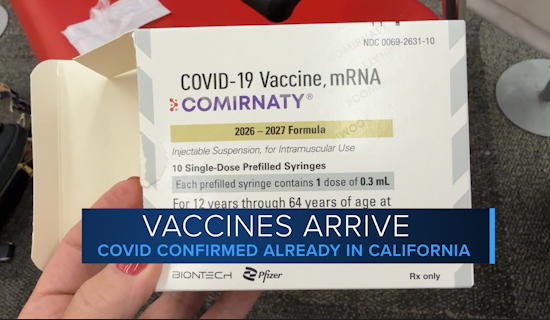
The 2026-27 COVID vaccine is now available on the Central Coast, arriving just as health officials confirm they've already detected a new strain of the virus in California.
Interim Health Officer Dr. Rick Rosen said the virus is showing up in wastewater data across the state, signaling what he describes as a late-summer, early-fall peak.
"This year, it looks like there's a late summer, early fall peak," Rosen said.
Rosen said the Food and Drug Administration recently approved the 2026-27 COVID vaccine, which was the final step needed before doses could be distributed in San Luis Obispo County. The flu vaccine is also now available locally.
"We don't really have a sense of what kind of a season we'll see. Meaning how many cases we'll see, how severe illnesses will be," Rosen said.
San Luis Obispo County health officials say they expect both COVID-19 and influenza to continue circulating this fall and winter. The county monitors local wastewater, test positivity rates and other indicators to track respiratory virus activity, including COVID-19, influenza and RSV.
Why get vaccinated?
According to Rosen, COVID-19 no longer causes the same level of disruption seen during the height of the pandemic, but it continues to cause hospitalizations and deaths, particularly among older adults and people with underlying health conditions.
He said the primary benefit of vaccination is reducing the risk of severe disease, hospitalization, and death, and that while vaccination does not guarantee someone will avoid infection, it can make an infection less likely to become severe.
The 2026-27 COVID vaccine has been updated to target strains currently circulating, rather than the original 2020 virus.
The 2026-27 flu vaccine is trivalent, meaning it targets three influenza viruses: an H1N1 virus, an H3N2 virus and an influenza B/Victoria lineage virus. All three components were updated for this season, with the H3N2 component targeting the XFG variant.
The California Department of Public Health urges residents to get both vaccines. A graphic below from the West Coast Health Alliance outlines the recommendations in detail:
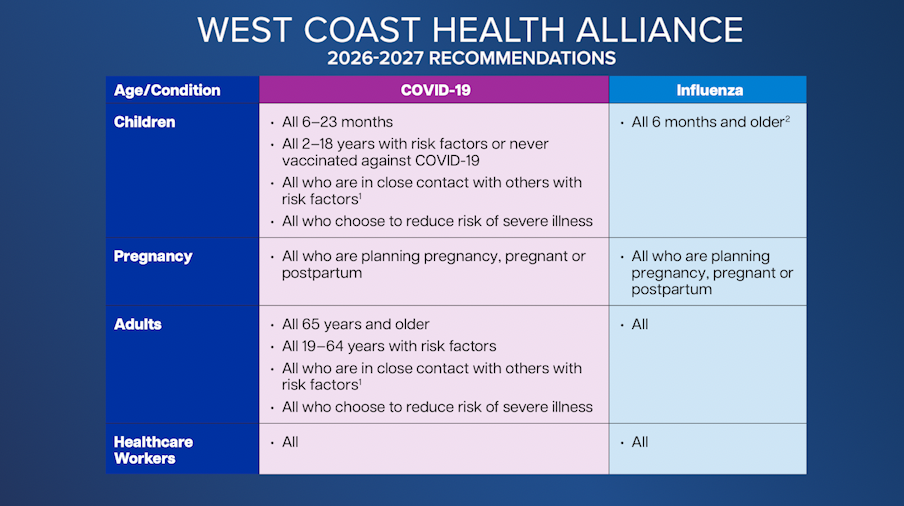
The West Coast Health Alliance recommends the COVID vaccine for all infants six to 23 months old, children ages two to 18 with risk factors or who have never been vaccinated, those in contact with high-risk individuals, those planning a pregnancy, everyone over 65, and all healthcare workers. The alliance also recommends the flu vaccine for everyone over six months old.
What residents are saying
Not everyone is on the same page about getting vaccinated this season.
Diana and Kent Bittleston said they plan to get their vaccines and have no hesitation about doing so.
"No vaccine fatigue; we always get our vaccines and flu shots, we just haven't gotten them yet," they said.
Ismail Karabulut said he believes vaccination is important and shared a personal experience that reinforced that view.
"I think everyone should get vaccinated. I don't think there should be any fatigue around it. In the past there was one year I forgot to get the flu and I got extremely sick and it's something I'm never going to do again," Karabulut said.
Steve and Sandra Marshall said they plan to get both vaccines.
"Well, we're definitely going to get both of them, flu and COVID," they said.
Others are less certain. Diana Ash said she got the COVID vaccine when it first became available but has since had second thoughts.
"I did get it when it first came out, and I'm finding out now that they're saying that is not good, so I'm kind of like on the border of not getting one this year," Ash said.
Patricia Margolis said she has decided not to get vaccinated.
"My individual decision is that nothing should be shot inside the body," Margolis said.
Nationwide vaccination rates remain low
Despite the recommendations, nationwide vaccination rates remain low. According to Centers for Disease Control data, only 18% of adults received a COVID vaccine last season, and only about 46% got a flu shot.
A University of Michigan poll of adults 50 and older found nearly three in 10 said they skipped the vaccine simply because they do not think they need it.
Insurance and access
In California, vaccines recommended by the California Department of Public Health continue to be covered by health insurance regulated in the state.
COVID vaccines are expected to be covered by most insurance plans, including Medi-Cal, and flu vaccines are generally covered as well.
Residents are encouraged to check with their health plan or provider regarding their specific coverage and where they can receive the vaccine.
For people without insurance or who are underinsured, programs and community providers may offer vaccines at low or no cost, depending on eligibility.
If you have a story idea you would like to send to KSBY Reporter Jessica Roe, you can reach her directly via email at jessica.roe@ksby.com.
