




Nearly two months after the Lompoc Police Department rolled out an AI-assisted dispatch system, officials say the tool is already handling thousands of non-emergency calls and helping reduce the workload for dispatchers.
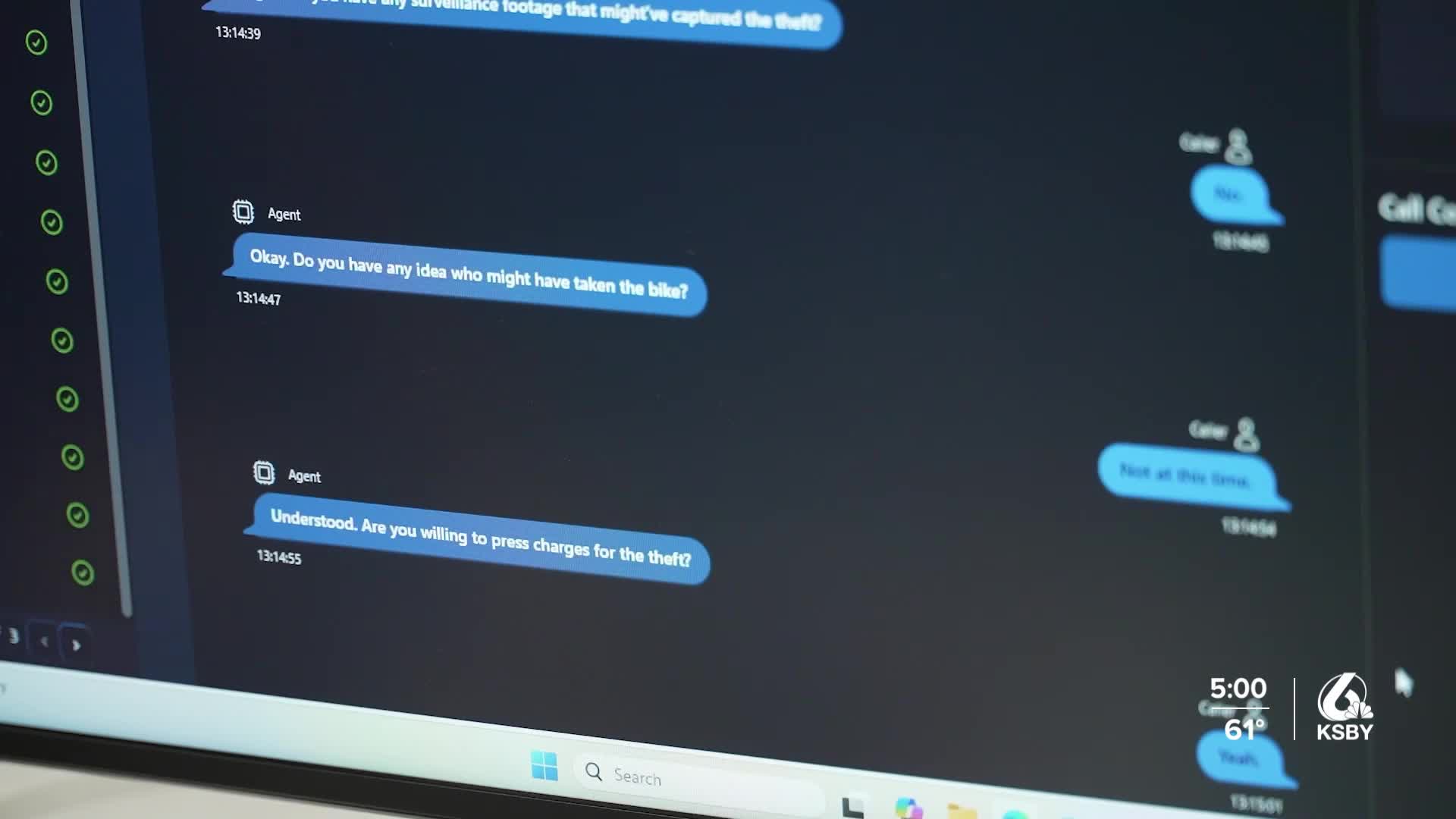
The system, called Hyper, was introduced in February to assist with calls made to the department’s non-emergency line. It collects information from callers and forwards it to dispatchers, allowing them to focus more on emergencies.
“We’ve been running it for about a month and a half. It’s fielded approximately 4,900 calls,” said Captain Augustin Arias. “And the average length of the calls about a minute and 45 seconds.”
The department’s dispatch center handles roughly 80,000 calls each year, often with just two dispatchers working at a time. Arias said the new system is helping manage that volume by filtering out non-emergency requests.
“Having Hyper as a tool helps reduce the amount of calls that they have to take, and allows them to focus on the emergency calls,” Arias said.
Police say the system is designed to handle select types of calls and has been rolled out gradually to ensure a smooth transition. Over time, more call types are being added as the department evaluates its performance.
Dispatch Supervisor Jazmin Brown said the system has already made a noticeable difference for staff.
“We do get busy,” Brown said. “So there are times where we’re having to pick up a business line and having them hold however long until we get through the emergency situation that we’re dealing with.”
She said callers can sometimes be placed on hold for several minutes, depending on call volume. With the AI system, callers are able to provide their information without waiting, which is then sent directly to dispatchers.
“With Hyper, they’re able to get their information out, give all the information that’s needed, then it sends it over to the dispatcher,” Brown said.
Arias said the system can also help in situations where large numbers of people are calling at once, such as during power outages. In those cases, the tool can answer multiple calls simultaneously, reducing wait times and freeing up dispatchers to respond to higher-priority incidents.
While police say the rollout has been largely successful, they acknowledge there is still a learning curve for the community as the system continues to develop.
“We just want the community to have patience with it as it grows,” Arias said. “We’re trying to make it better.”
The department is currently reviewing calls on a weekly basis and working with the company behind the software to make adjustments. Arias said officials plan to continue expanding the system’s capabilities over time.
Police emphasized that the AI system is only used for non-emergency calls and does not replace 911 services.
