

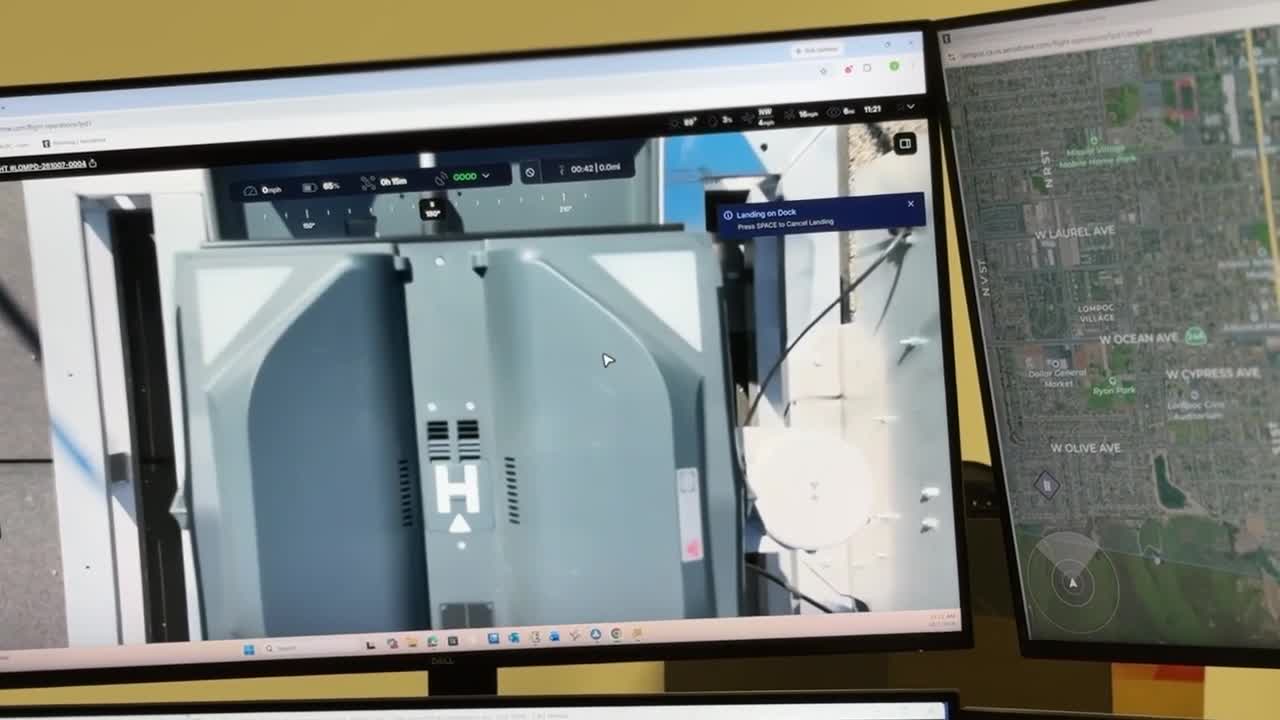



Lompoc police are using drones to give officers an aerial view of calls for service. KSBY News observed the system in action, as dispatch radio traffic came through and a pilot launched a drone toward a call.
Community service officer Jeremy Byron, one of the department’s drone pilots, can send the aircraft toward a location through its flight system. The drone launches from a docking station on the police station roof, while the pilot monitors its camera feed and can relay information to officers on the ground.
“The system is designed to where it makes it a little more easier for the operator to just click on a location so it goes directly to where you need it to go,” Byron said.
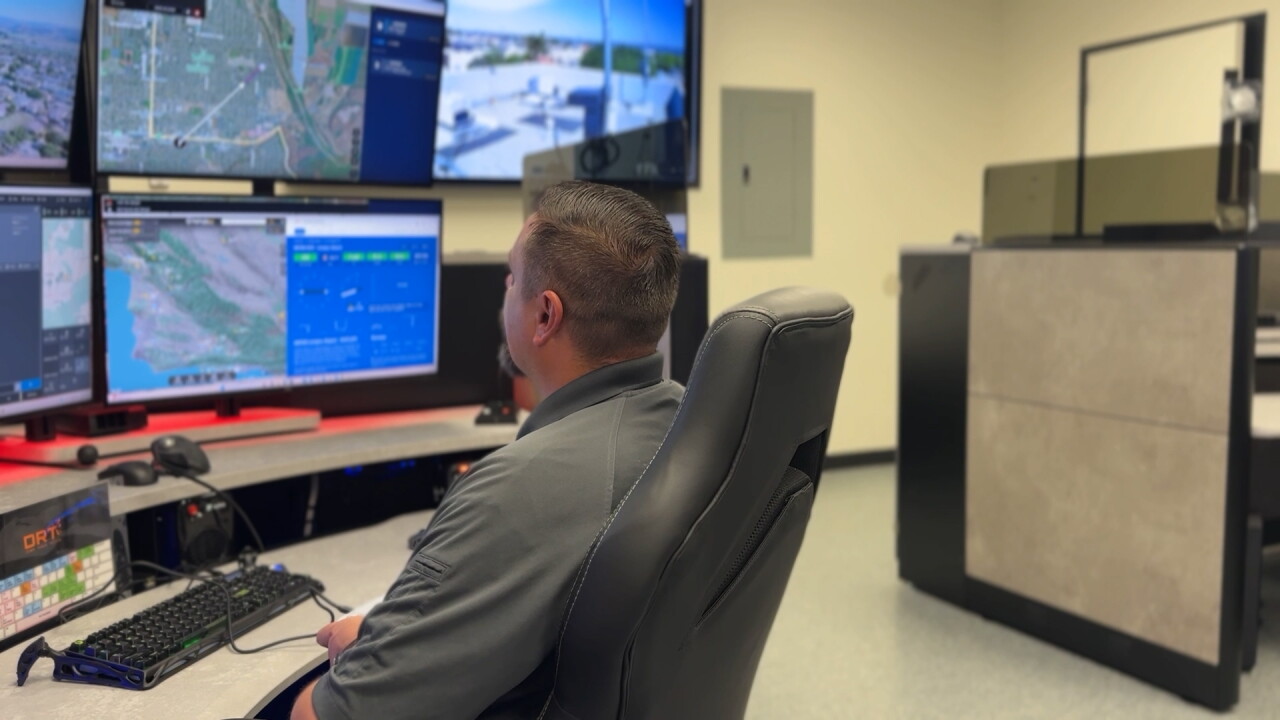
The drone program, known as Drone as First Responder, has been operating for about two months. Lompoc City Council approved a two-year pilot program several months ago. At a recent presentation, Police Chief Kevin Martin showed council members the department’s online transparency page and explained how the system works.
Martin said the drones are dispatched to urgent calls and return to the station after officers no longer need the aerial support.
“The drone only flies on hot calls or 911 calls,” Martin said. “It does not roam like a patrol officer does in a police car. It literally responds to that call, helps the officers, and then returns to the station.”
The drones are limited to a three-mile radius, according to Byron, and the system prevents them from entering the airport’s no-fly zone. Martin said the camera is designed to face forward as the drone travels to a call to help avoid capturing views of nearby homes.
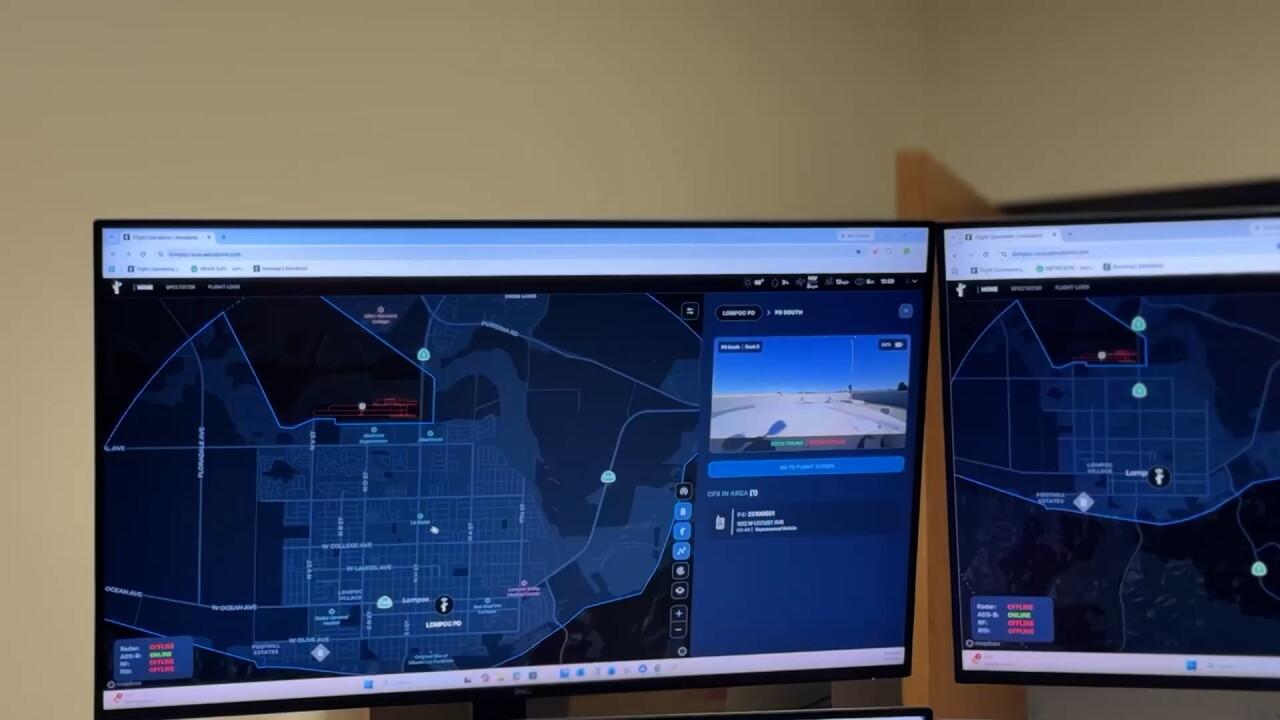
“We do everything we can to prevent any accidental visual of anybody’s home, personal lives or anything like that,” Martin said.
Privacy was a concern raised by residents during the council’s earlier discussion of the program. The department says flight information is available on a public transparency dashboard. The mayor also questioned whether the program’s 40-hour-a-week coverage would be available during a critical incident.
The two-year pilot is projected to cost about $426,000, including the drones, software and staffing. Most of the funding is expected to come from a state grant, with the city contributing roughly $100,000, according to city officials.
Martin said the department is tracking how long drones take to arrive at calls and how often they can help resolve a call without an officer needing to arrive. The department plans to present those results to City Council at the end of the year.
The department currently has two community service officers certified as drone pilots and is hiring a third. Martin said the pilot assignment rotates every six months. He said he hopes the drone pilot will eventually work alongside dispatchers in a new center, once upgrades to the city’s radio system are complete.
