

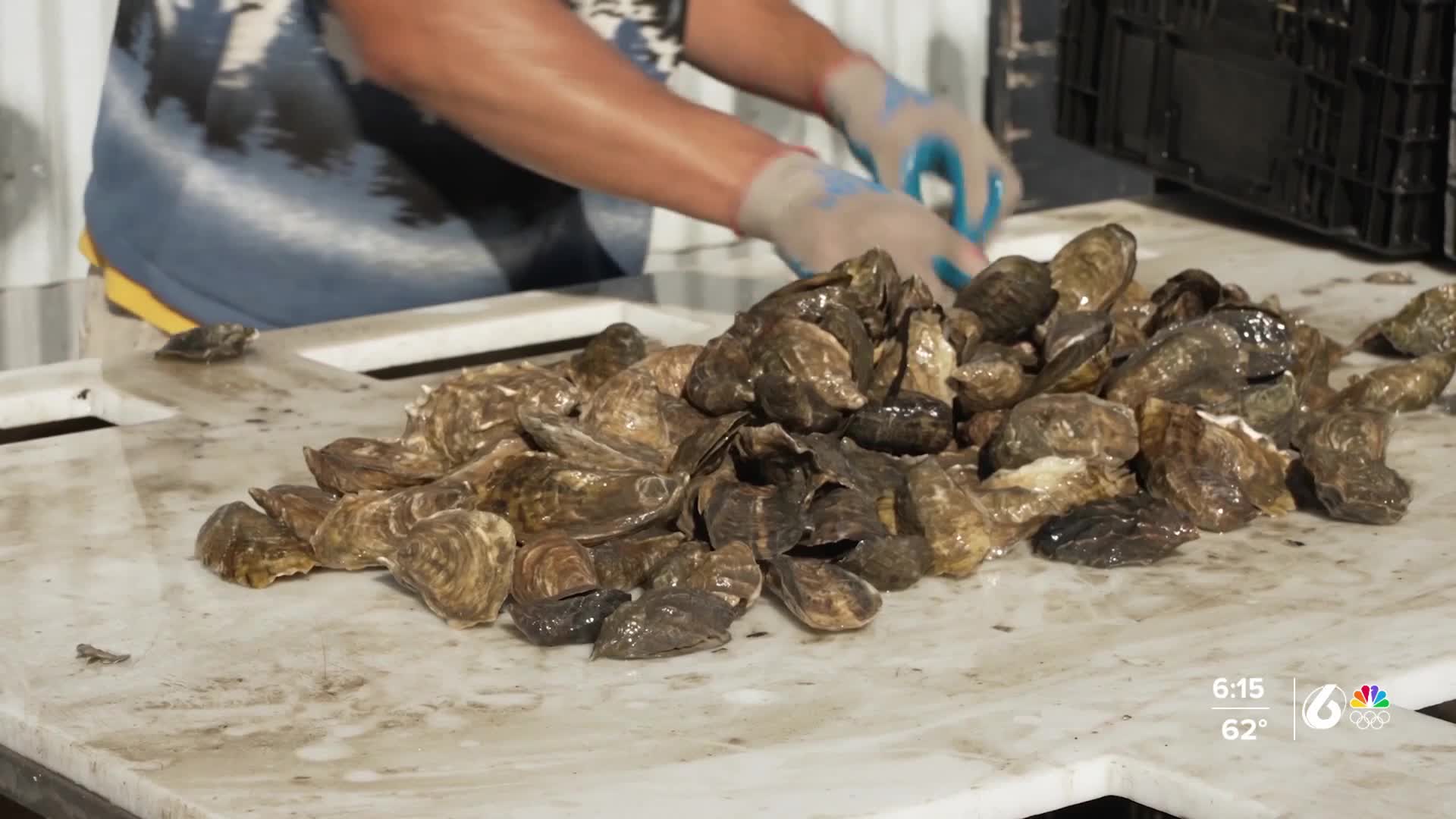


For more than a century, oyster aquaculture has thrived in Morro Bay's waters, but our changing climate now poses a significant threat to this multi-million-dollar industry. Local farmers are implementing innovative solutions to protect their operations as ocean acidification becomes an increasing concern.
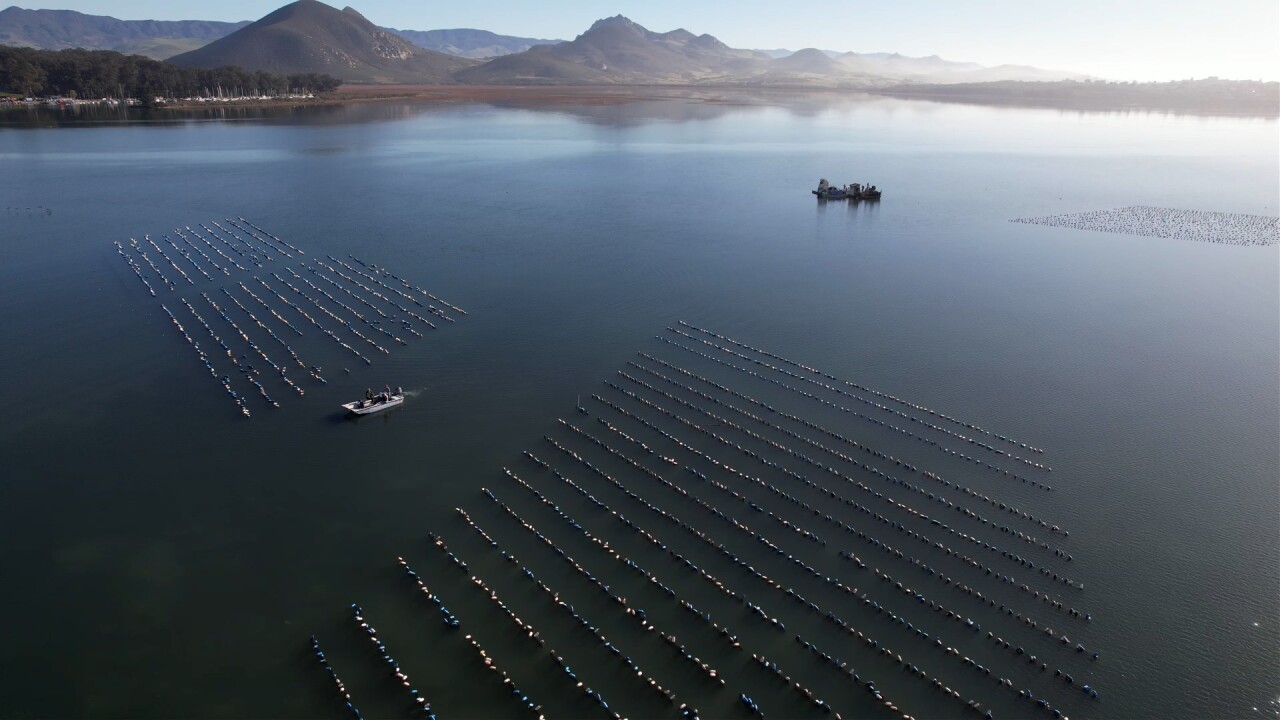
Beneath the waves in Morro Bay, nearly 5 million oysters are growing. Onshore, the hands of shuckers work quickly to keep up with demand.
At Morro Bay Oyster Company, crew member Robert Moon estimates "about 800 dozen a week here, and it varies quite a bit depending on demand."
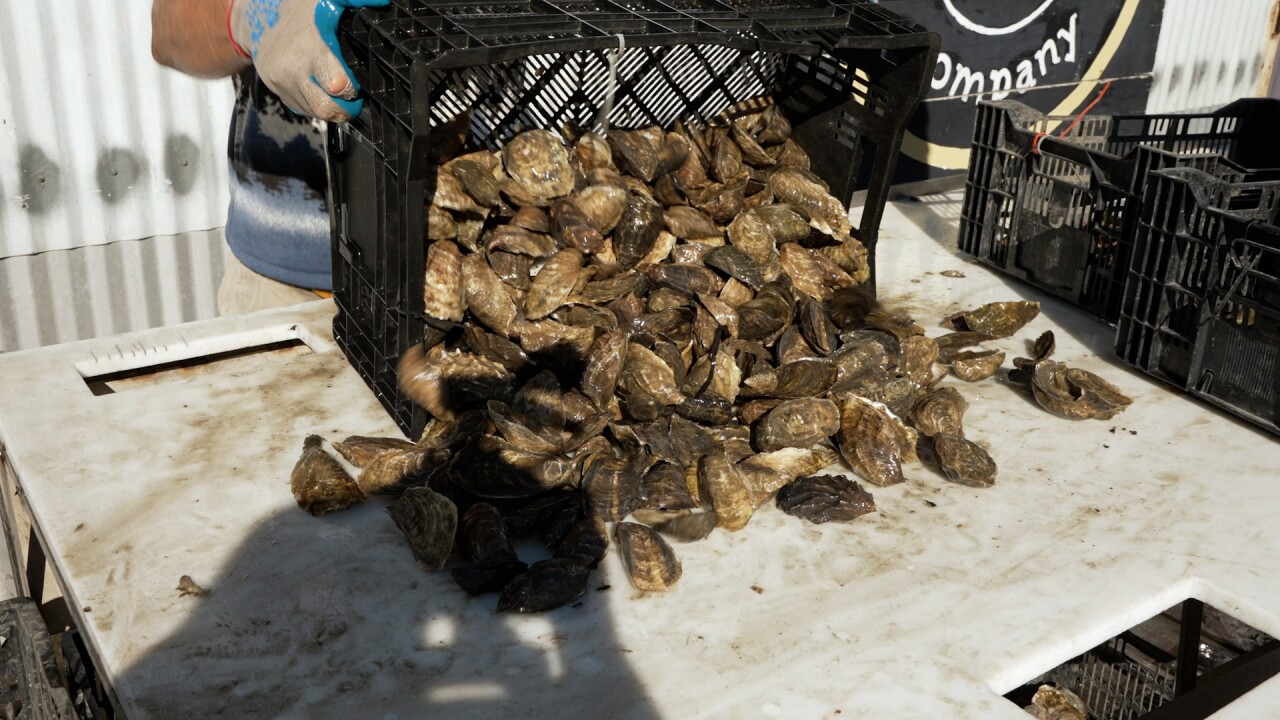
However, changing climate conditions are putting aquaculture at risk. Temperature and pH changes, particularly ocean acidification, are creating new challenges for oyster farmers.
Nick Soares from the Morro Bay National Estuary Program works closely with the farmers in the bay and with the research teams keeping a close eye on the bay. He stated, "Temperature, pH being the big one, like ocean acidification, these are all things that we're very aware of."
At Cal Poly's Center for Coastal and Marine Science, researchers are studying these impacts. In Dr. Emily Bockmon's research lab, students and professors are documenting how rising atmospheric CO2 levels are affecting seawater chemistry. Learn more about her research here!
"Unfortunately, we have a really robust documentation of seawater pH decreasing with time, and this is associated with the rise in atmospheric CO2," Bachman said.
Here is a graph of atmospheric carbon dioxide levels (in parts per million) since 1958 as captured at the Mauna Loa Observatory in Hawaii.

As more carbon dioxide enters the atmosphere, more of it dissolves into ocean water. That reaction creates carbonic acid in the water. More of that acid inherently lowers the pH level.

Lowered pH has ripple effects through the whole ecosystem, but for oyster farmers, the main focus is on shell development.
"So this idea that seawater is decreasing with time and the idea that low could create an environment that may be harder for oysters to grow their shells," Bachman said.
The earliest stages of an oyster's life are the most vulnerable to these changing conditions.
Nate Reiss from Grassy Bar Oyster Company in Morro Bay elaborated, "Ocean acidification has made it harder for hatcheries because it's at that point when the babies are really, really babies that they have trouble forming their shells."
At the Floating Upweller System, or FLUPSY, oyster seeds grow from just millimeters to the size of a quarter before being placed in the bay.
On the left, you can see many small 6-10mm oyster seeds versus the quarter-sized oysters on the right.

Fortunately for Morro Bay farmers, local conditions provide some protection.
"We have really strong shells here. That's one of the advantages of our water here," Moon said. "Not something we deal with too much is brittle shells. They generally tend to do pretty well."
Water flowing into the bay from Chorro Creek carries compounds that help neutralize acid, providing a natural buffer against acidification.
"At least here it seems like the creek influx is buffering the bay a little bit. It adds different carbonate, different ions, and stuff like that. It's helping prevent that acidification from taking place," Soares said.
Despite limited losses in Morro Bay, hatcheries across the West Coast are experiencing difficulties.
"I did hear of a hatchery having a big problem with it in Oregon near where I'm from originally," Reiss said.
While impacts aren't being felt locally yet, widespread acidification is expected within the next century. According to the Environmental Protection Agency, the ocean is the most acidic it has been in the last 2 million years.
Click here for more information from the EPA.
"We are going to see lower pH in Morro Bay in the future. You know, when we think in the terms of decades of scale, pH will be lower. And so that's something that the farms are going to have to contend with," Bachman said.
Local oyster companies are already adapting to these future challenges.
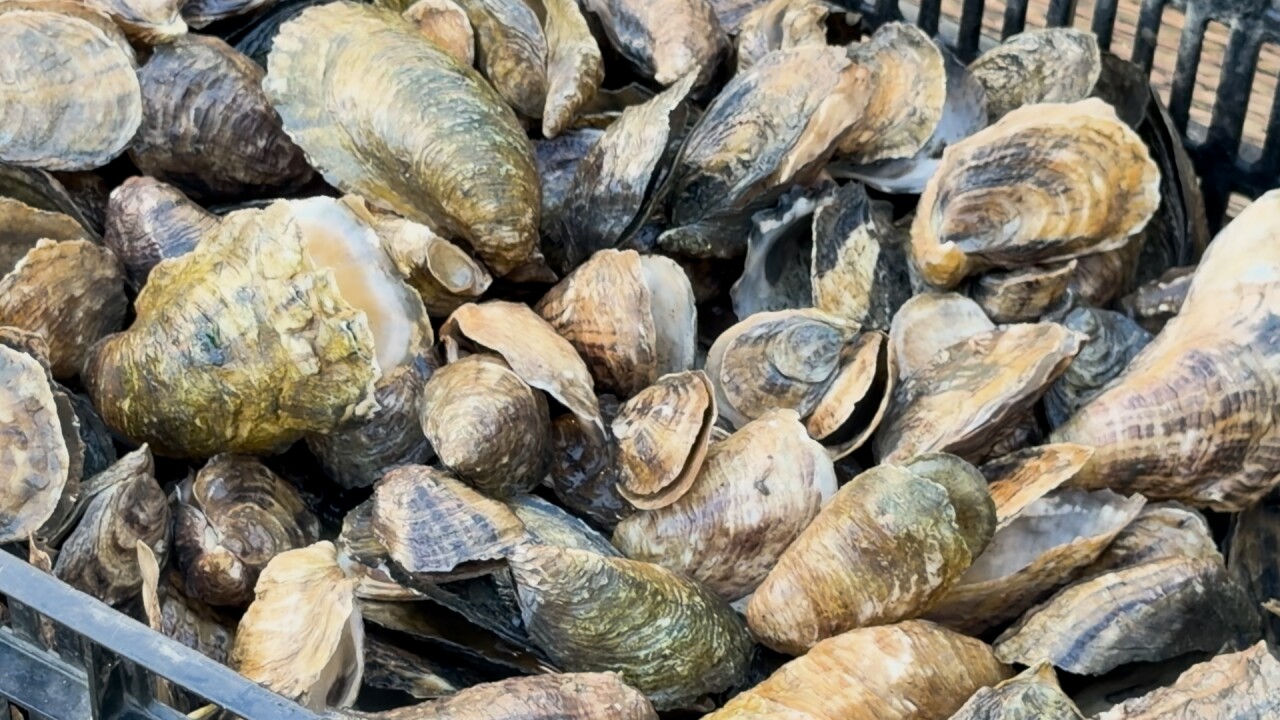
"From my perspective is that Morro Bay Oyster Company and Grassy Bar Oyster Company are adapting and finding really positive ways to move forward," Reiss said.
The companies are investing in the native Olympia oyster market and implementing pH-lowering seagrasses on their farms as protective measures.
"There's been a lot of discussion of co-locating seagrasses with oyster beds to sort of manage different seawater chemistry. The seagrasses can help raise the sea water pH," Bachman said.
Despite the challenges ahead, local farmers remain optimistic about finding solutions.
"California oyster farms are quickly figuring out what to do about it, so I just think there's like a whole lot of hope," Reiss said.
If you have a story that you would like Meteorologist Vivian Rennie to look into, send her an email at Vivian.Rennie@ksby.com
