

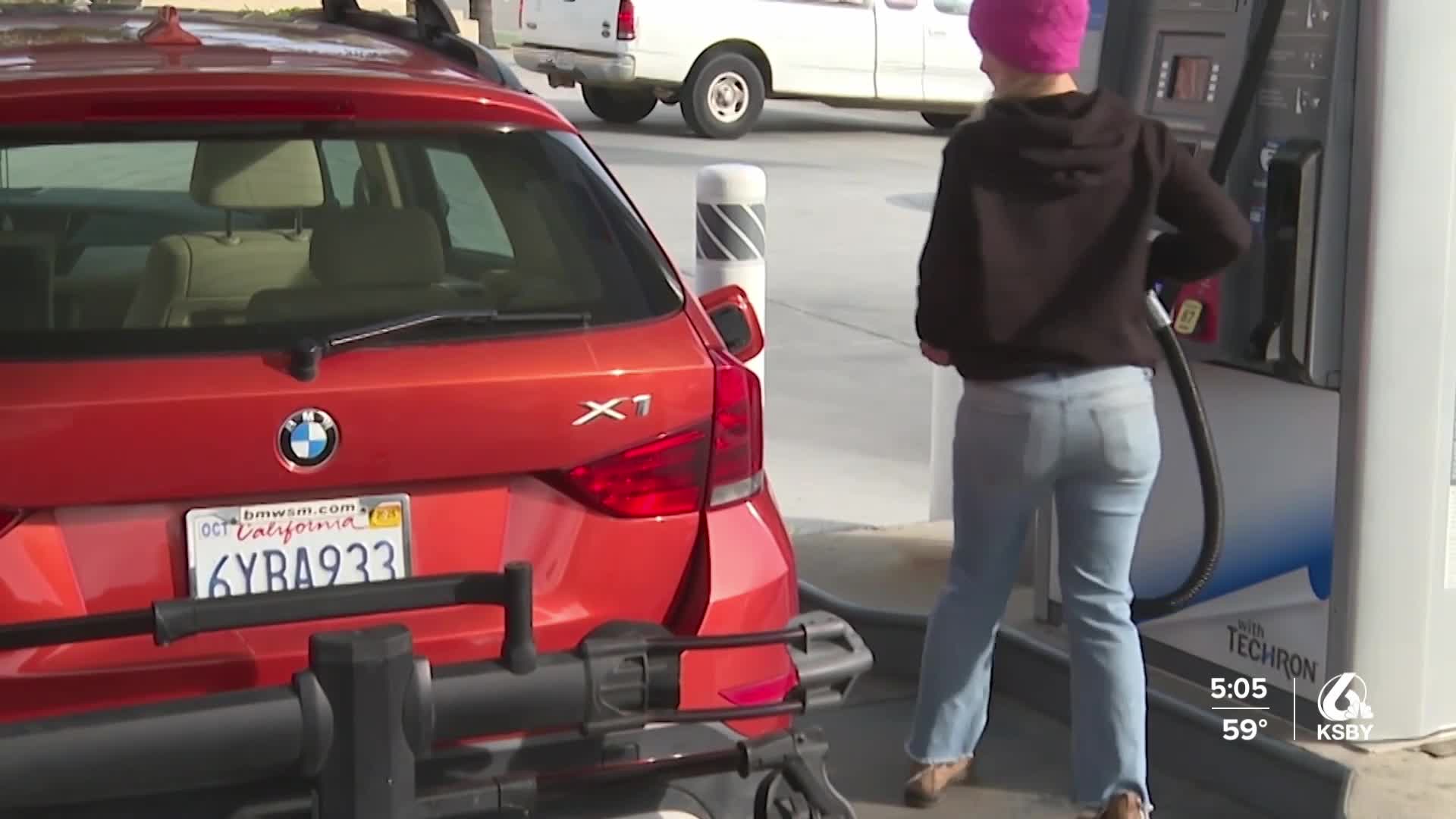



California consistently has the most expensive gas prices in the United States, according to AAA. On Monday, an agency spokesperson told KSBY that those costs could rise even more, in part due to the conflict between the U.S. and Iran.
Iran produces more than 3 million barrels of oil per day, accounting for roughly 4% of the world's supply, according to AAA representative Kandace Redd.
The U.S. and Israel's military strikes against Iran over the weekend rattled oil markets. U.S. crude oil soared more than 7% on Monday, while Brent, the international oil benchmark, soared 9%.
There is concern markets could see further disruptions following an address at the White House on Monday, where President Donald Trump said the campaign in Iran could last several weeks.
Although the U.S. does not import Iranian oil directly, it is sold on a global market, which could mean impacts at American gas stations.
This comes as prices are already trending upward because of seasonal factors, according to Redd.
Data from AAA shows California's average is up about 3 cents from last week, hovering at around $4.65 per gallon.
In San Luis Obispo County, drivers are paying about $4.79 per gallon, which is 25 cents higher than in February. Santa Barbara County is up more than 20 cents from February, sitting at $4.57.
Refineries are reportedly beginning to produce more expensive summer-blend gasoline. This is compounded by expectations for higher demand during the spring break travel season.
KSBY stopped by the Chevron gas station on Calle Joaquin in San Luis Obispo, and asked drivers what they were noticing about prices at the pump.
"I have noticed it's going up. Fortunately, I don't have to commute far, so it probably doesn't impact me the same way it does other people," said Healdsburg resident George Christie, "But despite what you see on the news, and what some people are telling you, for me they just keep going up."
Oceano resident Cesar Dominguez shared a similar sentiment.
"They just keep going up. For a moment, we were kinda seeing it go down a little bit. Then all of a sudden, it's just little by little, and I just don't know when it's going to end," Dominguez told KSBY.
As of Monday night, all eyes are on the Strait of Hormuz, a key trading route that carries about one-fifth of the global oil supply. Iran asserts control over the passage of tankers through the area.
