

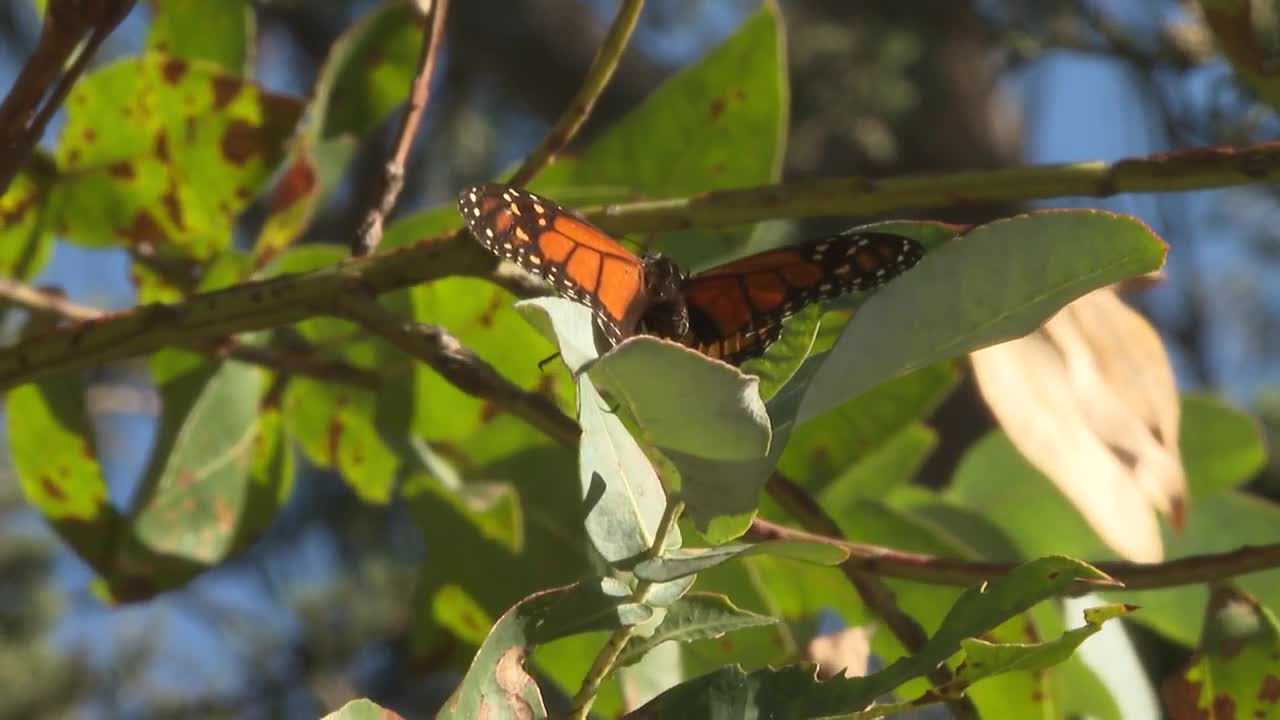



Many western monarch butterflies make Pismo Beach their home for the winter. However, in recent years, the number of butterflies has been declining and researchers don’t know exactly why.
It was hard to find parking Friday morning at the Pismo Beach Monarch Butterfly Grove as tourists, photographers and locals came to catch a glimpse of a western monarch butterfly overwintering in the eucalyptus trees.
Rebecca Lyles was visiting the grove for her daughter's birthday.
“We have seen a ton up in the trees over there, and we were not expecting that at all,” Lyles said.
Though over 400 butterflies have been counted in the area as of December 12, that number is significantly lower than usual. What were once thousands are now hundreds.
Cal Poly biology professor Francis Villablanca has been researching the western monarchs' migration patterns to find out why the population has been steadily declining since the early 90s. He said the answer isn’t easy.
“We don't have a super solid handle on why this decline is happening," Villablanca said. "We've got a fair number of ideas, and we've been running those ideas through models and the idea behind the model is to see... if the model will make a prediction about monarch butterfly population size.”
He said these ideas are large-scale issues, like climate change, pesticide use, and natural habitats being converted into agricultural land, which result in the loss of a crucial plant for the butterflies: the milkweed.
Villablanca said researchers are actively looking into each theory but it’s hard to find a direct culprit.
“[It's] really hard to untangle those things because they can be related," Villablanca said. "Certainly, anything that changes over time could correlate with climate change, pesticide use, all those sorts of things are the most likely and people are investigating the role of milkweed as it interacts with climate change.”
If you want to help the butterflies, Villablanca said it’s best not to plant milkweed. It could actually harm the butterflies’ migratory patterns and carry deadly pesticides.
“There's a lot that obviously we don't know about butterflies and what they do for us," Lyles said. "So definitely protecting them, I think, would be awesome.”
Villablanca said the best way to participate in conserving the western monarch butterfly is to look into information from the Xerces Society for Invertebrate Conservation.
