

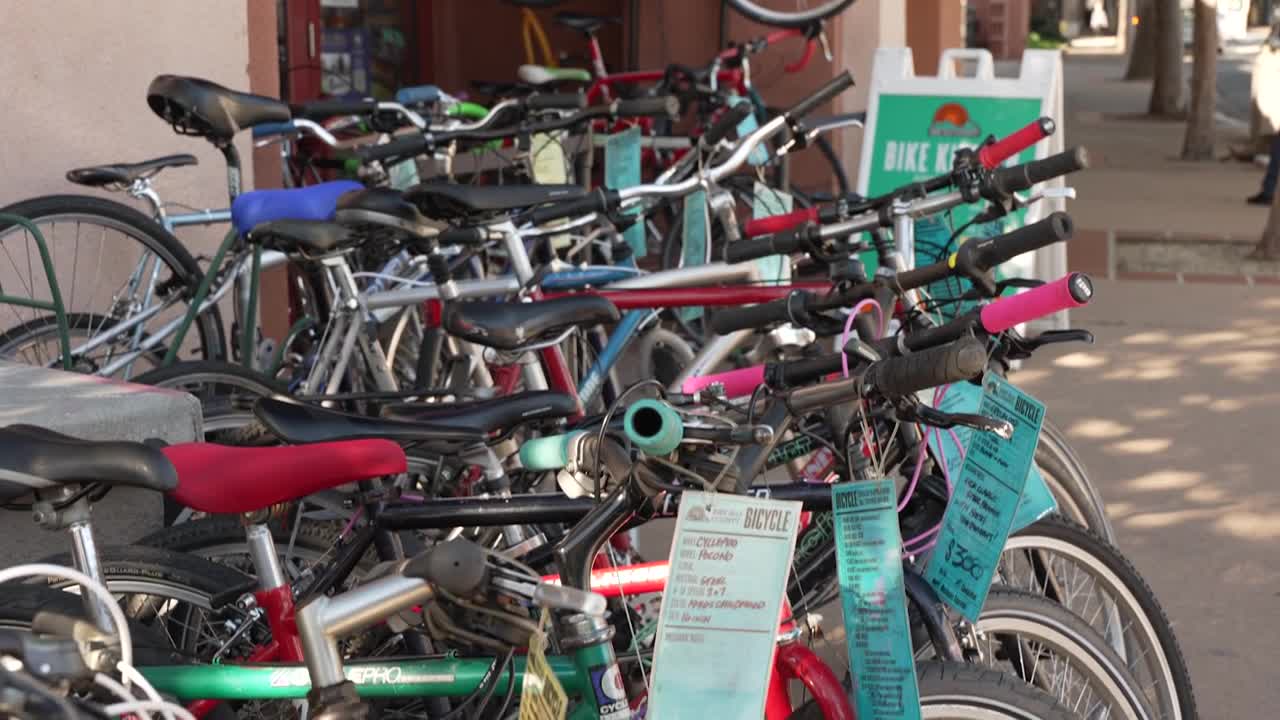



Two bike shop break-ins in less than a month have raised questions about just how common bike thefts are in San Luis Obispo and how riders can protect themselves.
Garrett Doolittle, manager of Cambria Bike Outfitter, says the motivations behind the break-in at his shop are unknown to him, but it's still frustrating.
“We’re all just kind of like… why is this happening?” he said.
Cambria Bike Outfitter break-in:
Dr. Trisalyn Nelson, a professor in the Department of Geography at UC Santa Barbara, has studied bike theft and knows the emotional toll firsthand. Her interest in the subject began after her son's bike was stolen outside a movie theater.
“The look on his face, the tears in his eyes — it was so dramatic,” she said, recalling when her son’s bike was stolen. “It’s a terrible feeling.”
Bikes are relatively easy to steal and quick to resell. San Luis Obispo Police say the crime is often driven by value.
“Bikes are a big commodity,” Art's Cylcery employee Hudson Robbins said. “They’re expensive, and people know that. They’re easy targets.”
Art's Cyclery was also broken into early in December.
Art's Cyclery break-in:
Police data shows 213 bikes were reported stolen in San Luis Obispo in 2024 and 159 in 2025. But Nelson says those numbers underestimate the problem. About 40% of thefts go unreported nationwide. According to the Bike Index, the annual value of stolen bikes in the U.S. is estimated at $1.4 billion.
High-dollar e‑bikes are especially at risk because of their price. The high-volume bike area around UCSB sees plenty of bike thefts, according to Nelson.
“In Isla Vista, the move is to buy a cheap bike you don’t mind losing. That’s the attitude many people have,” Nelson said.
Julian Mora, owner of 2 Mexicans Junk Removal, says many stolen bikes, or bike parts, end up in homeless encampments.
He showed KSBY firsthand a few of the encampments along San Luis Creek, where debris and a graveyard of lost items, including bikes, can be found.
“When we clean out encampments, we see bike parts all the time,” Mora said. “People find broken bicycles around town, grab parts from different places, and rebuild them.”
He even described seeing camps that looked like a full bicycle shop with scattered frames, tires, seats, and pumps, all traded for goods.
Nelson says about half of the people who lose a bike ride less or stop riding entirely. Police and cycling advocates recommend:
- Using high-quality U‑locks
- Locking bikes to a fixed object through the frame and wheel
- Reporting thefts immediately to increase the chance of recovery
- Registering your bike with your local police department or online databases like the National Bike Registry and The Bike Index
