

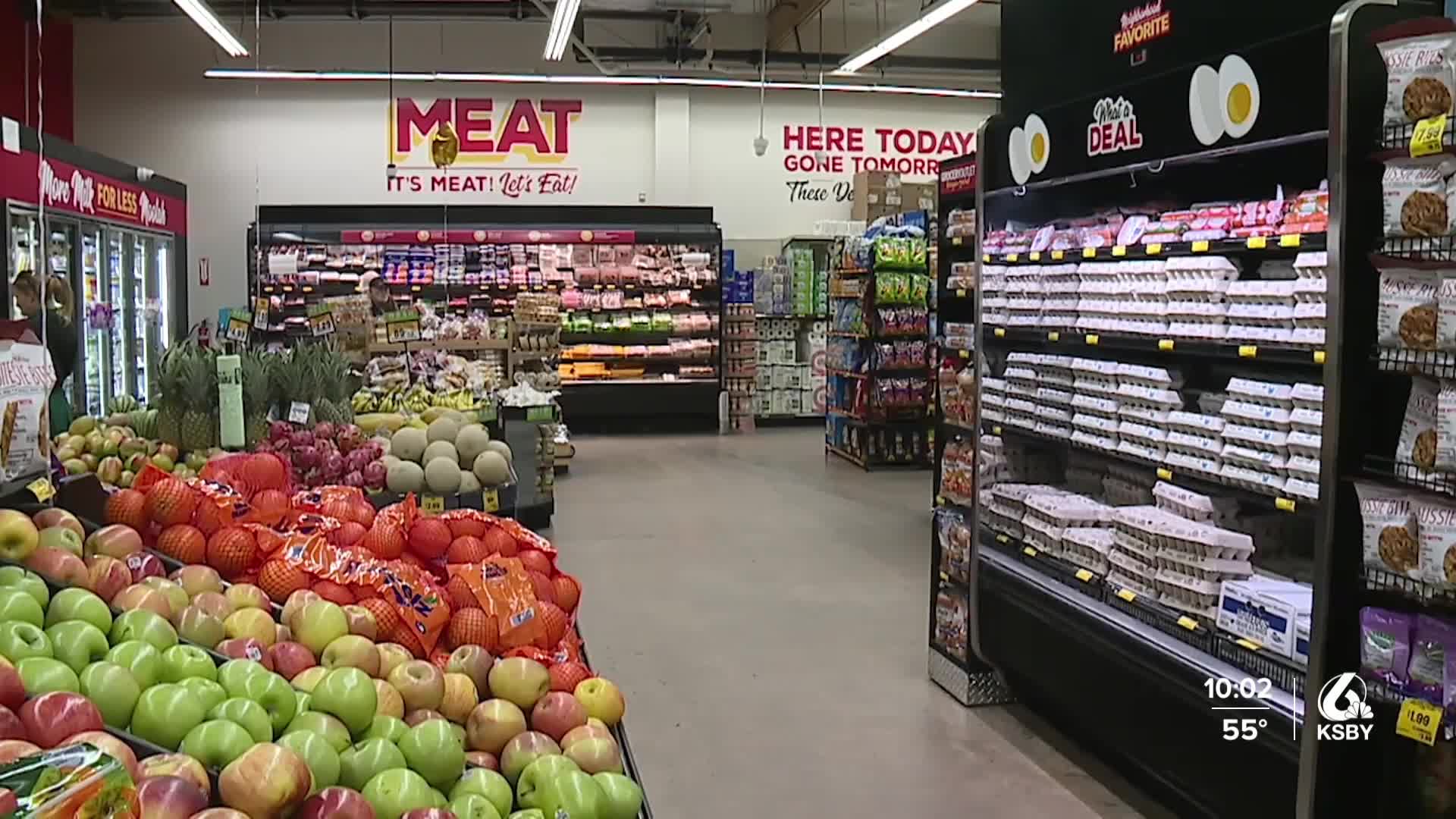


As the conflict in Iran continues, there are questions about what impacts could be felt here locally and when.
"I want to stress, we certainly have not seen food price impacts yet, but that's what I'd say we'd start to see in the next say one to three months," said Ricky Volpe, an Agribusiness professor at Cal Poly with a focus on food pricing.
Volpe says that, at this point, it's too early to see an impact, but that he and other industry experts are monitoring potential impacts down the line.
"We are concerned about the impact on energy prices. I like to think of, when energy prices increase, I call it a multiplier effect, because it affects every stage of the food supply chain," he said.
To get a better understanding of the impacts at the beginning of the chain, KSBY News reporter Karson Wells visited with Tom Ikeda, a third-generation farmer on the Central Coast.
"Transporting our products to the markets takes fuel. It's all trucked. To work our ground, tractors need fuel. Just trying to imagine in the time of my grandfather's time using the plow horses, you know, trying to get everything done on the scale we do today with those kinds of animals would be almost impossible," Ikeda said.
He says that here on the Central Coast, farmers can produce crops year-round, but he agreed with Professor Volpe that it's too early to see too much of an impact.
"Everybody is in kind of a wait-and-see mode. We'll see what happens and how it impacts supply and demand," Ikeda said.
While impacts won't be felt immediately, Volpe had a few tips on how to save money if prices do start to rise.
"People can always make substitutions. And when I say, when energy prices and labor prices and labor costs increase, this is where savings through bulk foods, cooking at home, simple ingredients, private labels — that's where those price differences in the supermarket really start to become clear, because I think folks have this idea that in the center aisle, servings are cheaper, calories are cheaper, and you know that that's true to some extent, but those are also the foods, these packaged, prepared, UPC-coded foods — they get hit the hardest when we see labor and energy prices go up," Volpe said. "People can expect to see the price for, you know, basically anything packaged, prepared, shelf stable, you know, your breakfast cereals, your condiments, your frozen meals, all that sort of stuff to go up a lot faster than what was going on in the perimeter of the supermarket."
