

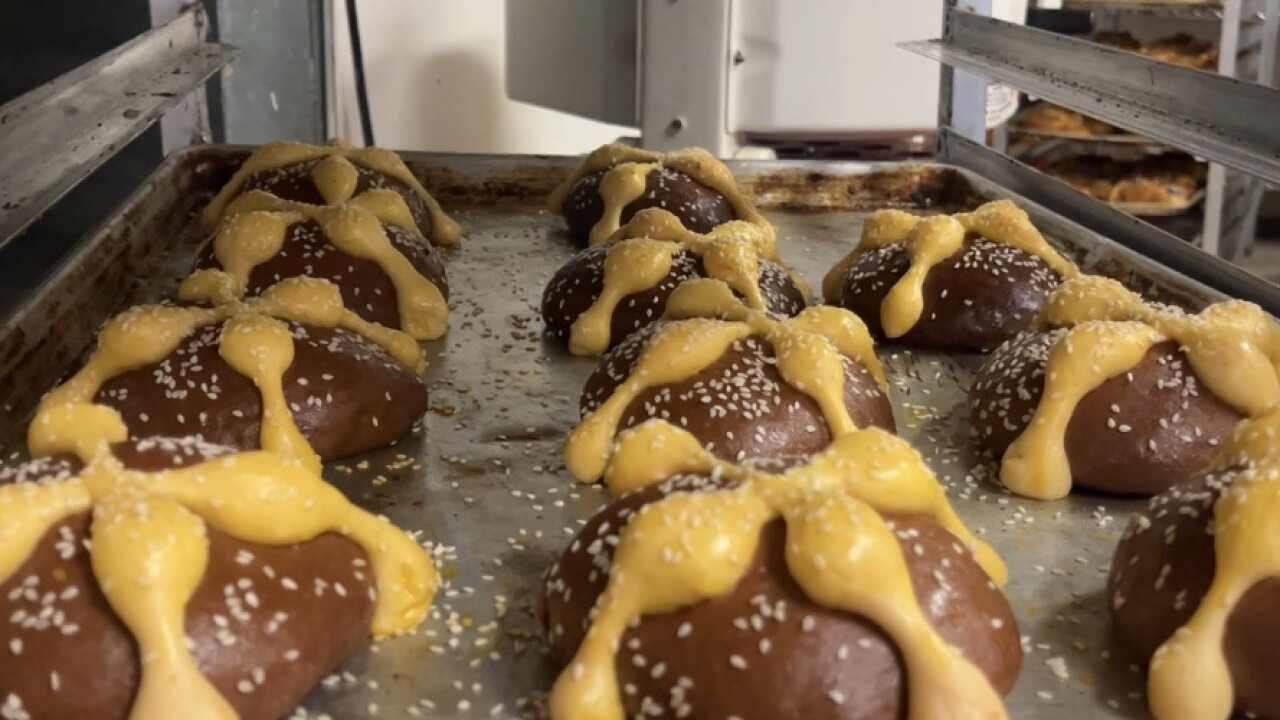


As families gather at cemeteries and prepare ofrendas, or altars, for Día de los Muertos, Pan de Muerto remains an important part of the tradition, connecting generations through food, culture and remembrance.
Pan de Muerto, which translates to “bread of the dead,” is traditionally prepared around Día de los Muertos, or Day of the Dead. The bread is often flavored with orange and decorated with pieces of dough that represent bones.
For Jose Mendoza and his family, making and sharing the bread is a tradition that goes back generations.
Mendoza said he remembers his grandmother bringing the family together to make the bread, sometimes staying up throughout the night. Now, he and his family are passing that tradition down to their children, grandchildren and great-grandchildren.
“At my grandmother’s house, everyone would get together. We would stay up all night making the bread, and now we’re teaching our children what was taught to us,” Mendoza said.
At Panaderia Mana in Santa Maria, bakers are also working to keep the tradition alive.
Marisol Silva, the bakery's manager, said the business has been selling approximately 500 loaves of Pan de Muerto a day since Friday.
Bakers begin preparing the bread as early as 3 a.m. because of the time and attention needed to make and decorate each loaf.
“Making Pan de Muerto takes time. It’s a slower process because you have to decorate it, and it has its own process,” said Felix Hilario Ayala, a baker at Panaderia Mana.
For Evelyn Mendoza, Pan de Muerto is also a meaningful part of her family's annual tradition of honoring her grandfather, who is remembered on their ofrenda.
She said the bread serves as a symbol that he remains part of their family.
“It’s a symbol that he’s still with us and that we still hold him close in our hearts,” Evelyn Mendoza said.
Both families and bakers say passing down the tradition is important to preserving their culture and keeping memories of loved ones alive.
Hilario said it is especially important as longtime teachers of the craft begin to retire.
“It’s important because the teachers who pass down this tradition are starting to retire,” Ayala said.
Evelyn Mendoza said she wants younger generations to continue embracing their culture and remembering family members who have passed away.
“I think it’s important because I want them to love our culture and to have that love for all the family members who have passed on,” she said.
