

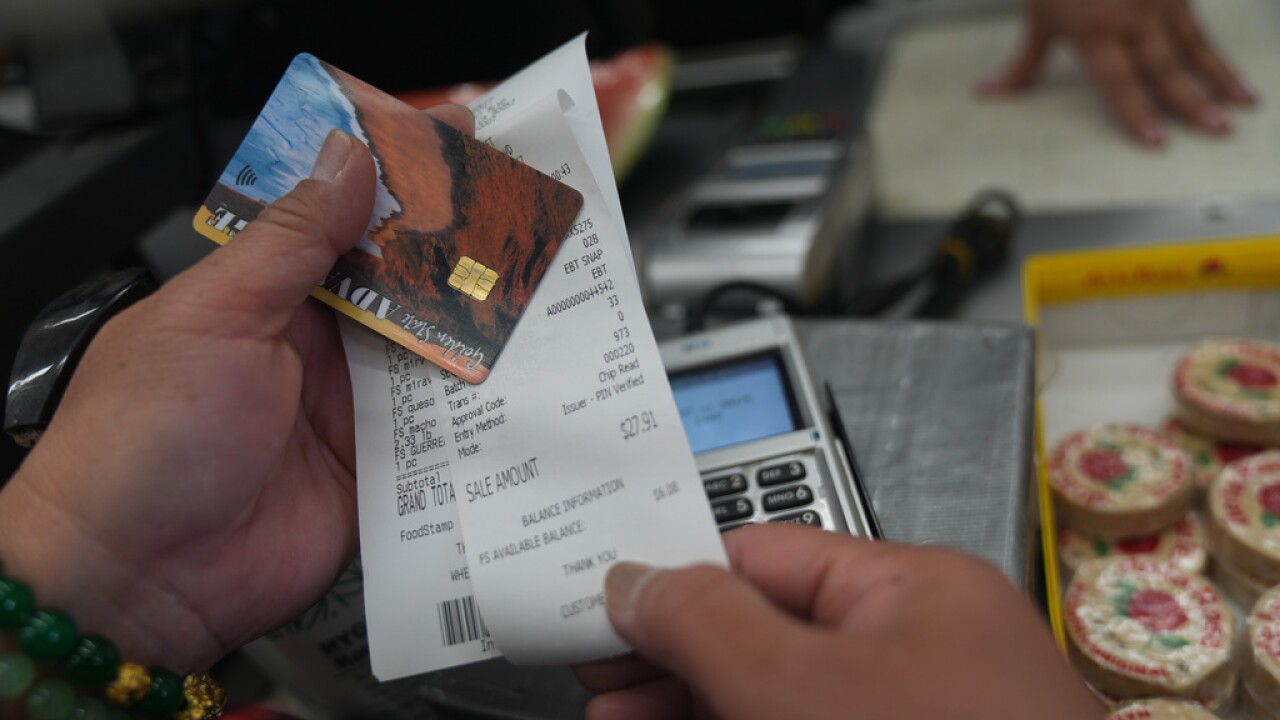


Millions of Americans who rely on federal food assistance are facing new restrictions on what they can purchase, as more states roll out bans on sugary drinks and snacks under the Supplemental Nutrition Assistance Program.
So far, 22 states are implementing bans on items like soda, candy, and energy drinks through waivers submitted to the U.S. Department of Agriculture. The latest states approved to move forward are Kansas, Nevada, Ohio, and Wyoming.
The changes have caught some recipients off guard. Kassy Donat, a SNAP recipient in Idaho, forgot about the rule change until she tried to buy a drink during a routine shopping trip.
RELATED STORY | Six more states ban junk food purchases with SNAP benefit
"I scanned the EBT card, and it declined," Donat said.
Donat ended up paying with her debit card, but said the restrictions stretched her already tight budget.
Bans on using SNAP benefits for junk food
While SNAP is a federal program, states are given flexibility on whether to restrict certain items, meaning there is no one-size-fits-all approach to how the changes are being rolled out.
A few states — including Indiana, Nebraska, and Utah — rolled out restrictions on January 1. Others, including Missouri, Ohio, and Virginia, won't enforce the changes until October.
On the USDA website, the administration said the reform is meant to "restore nutritional value within the Supplemental Nutrition Assistance Program."
But the rollout is raising concerns among retailers about costs and complexity. Rob Ikard with the Tennessee Grocers and Convenience Store Association said the state's restrictions, which go into effect July 31, will come with a financial burden.
"This is certainly going to cost food retailers in Tennessee money to implement this policy," Ikard said.
Restrictions vary state to state
In addition to timing, the products SNAP users can buy with their benefits vary. For example, Indiana placed restrictions on the purchase of soft drinks and candy. Across the state line in Ohio, only sugar-sweetened beverages are restricted under the state's new rules.
Angela Fernandez, senior vice president of market development at GS1 US, said that while the restrictions are similar, nuances from state to state make the changes more complicated.
"Is it candy? Is it chocolate-covered? What percent of natural juice is inside of the product? Those then start to determine the eligibility," Fernandez explained.
Fernandez said larger chains may be better positioned to handle the adjustment, but independent stores could face a steeper challenge.
RELATED STORY | $100,000 SNAP benefits fraud scheme busted in Ohio investigation
"So for the mom and pop, I may be going up and down the aisles, trying to look at those items and say, 'Okay, what is eligible for the program? What's no longer eligible?'" Fernandez said.
Right now, retailers throughout the country are working to cut through confusion.
"We're really seeing retailers provide education to their sales associates and especially the front-end checkout register folks," Fernandez said.
Ikard expects some hiccups along the way in Tennessee.
"An item might unintentionally get purchased with SNAP dollars that shouldn't have been allowed," Ikard said.
The restrictions also get more complicated near state lines, where a regional grocer may have locations in more than one state. A SNAP recipient may be able to use their benefits to buy a soda and candy bar in one state, but 10 minutes away, it may be banned.
For Oklahoma grocery store owner AJ Johnson, there is a silver lining to the changes.
"We all have a little sweet tooth in us. But it does give us the opportunity to lean into fresh and healthy access," Johnson said.
As of last year, nearly one in eight Americans received SNAP benefits. While the USDA approves and oversees the food restriction waivers, states are responsible for implementing and enforcing the rules.
