

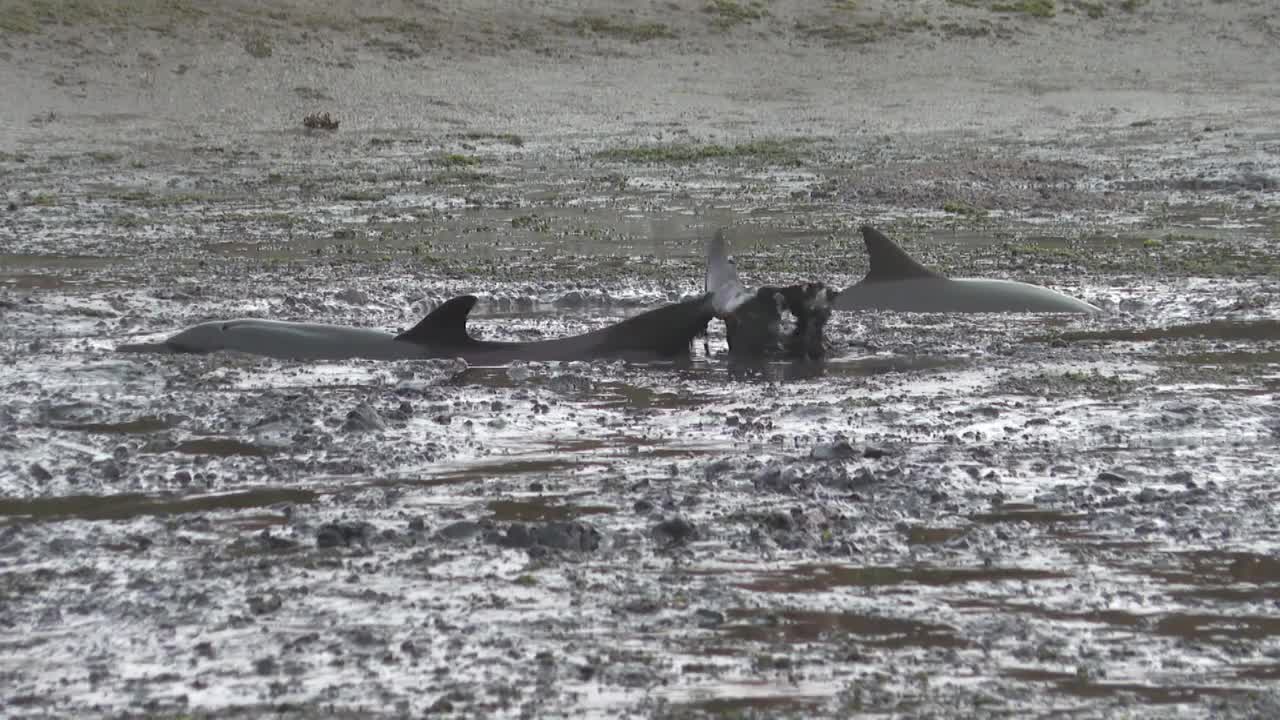


Last week in Los Osos, a pod of dolphins made its way into the Cuesta Inlet, bringing many onlookers to the area.
“I think some people were kind of excited to have the sightings like 'wow how majestic how cool' and immediately I thought 'oh no that’s like really bad news' just thinking of like the mud bottom and how high the tides get and how low it can get,” said Los Osos resident Kat Meyo.
Once the tide went out, the excitement turned to worry, as several dolphins became stuck in the mud.
Rescuers arrived Tuesday but said they were unable to do anything until the next morning.
Los Osos resident Cassidy Feldhaus tells me she saw multiple posts about the dolphins on social media.
“A lot of concern around," Feldhaus said. "You know any wildlife especially big marine mammals that big being this deep in the inlet.”
The Marine Mammal Center successfully removed and released three dolphins to the open ocean the following morning. Another dolphin did not make it through the night, leaving some people questioning why more wasn’t done sooner.
KSBY News reached out to the National Oceanic and Atmospheric Administration to learn more about what goes into each rescue.
California Stranding Coordinator Justin Viezbicke said decisions are made on a case-by-case basis and each requires a different plan, as well as different tools, and resources.
In an email to KSBY News this week, a spokesperson for the Marine Mammal Center said that due to the conditions, proceeding with the rescue on September 29 presented risks for both the dolphins and volunteers.
“To know that there’s a rescue team for sure because if that wasn’t a resource I don’t know if any of those would’ve survived," Feldhaus said.
Viezbicke said that when authoirized rescuers come across strandings, it usually means there is something wrong with the animal, saying that “just pushing them back without knowing why they are there can be just as cruel as leaving the animal alone.”
He added that for animals not listed under the endangered species act, such as dolphins, stranding response permits are issued through NOAA's West Coast Region.
Additionally, NOAA’s website states that under the Marine Mammal Protection Act, anyone found harassing animals can face fines up to $36,498 or even jail time.
Marine Mammal Center Spokesperson Giancarlo Rulli said over email that the organization shares in the community’s heartbreak for the dolphin that died. He added they’re hoping to learn more when a autopsy is done in the coming weeks.
Rulli said in a statement:
"The events along the Los Osos shoreline last week were a powerful example of how complex and unpredictable marine mammal rescues can be in a fast-changing and stressed ocean environment—and how much a community can come together when wildlife is in distress.”
“I think a lot of people like it’s nature or nurture all these things of like do we just let nature just take it’s course and like leave them be or like do we intervene?” Meyo said.
Viezbicke advises anyone who comes across a stranded marine mammal to leave it alone and report it to the marine mammal stranding network.
