

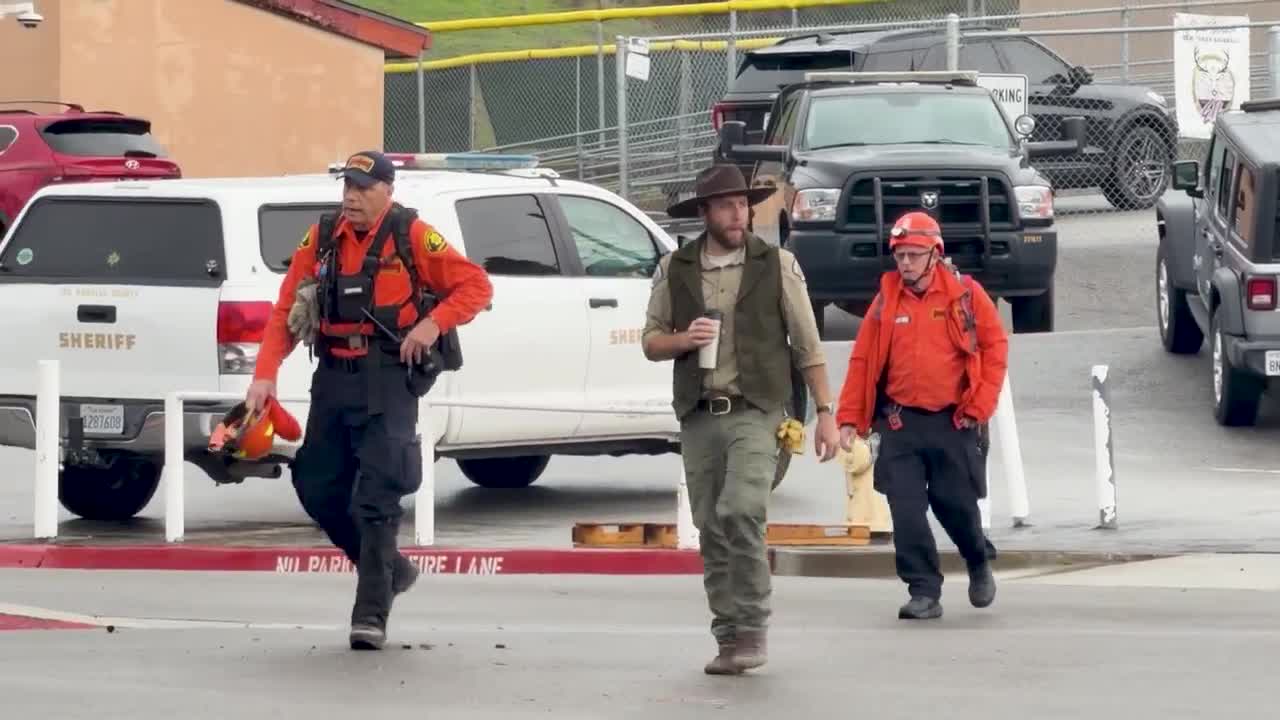



More than a dozen organizations from across California were involved in the recent search for a missing San Luis Obispo high school student. How do large-scale, multi-agency search and rescue efforts like this come together?
Search and rescue requests start small. A deputy gets a call about a missing person. If that person is considered at-risk — because of age, medical condition, or the environment — the search and rescue team is activated.
John McDaniel is one of the San Luis Obispo County Sheriff's Office commanders.
“Once we know that it's going to be beyond our resources, we'll start making mutual aid requests just because of the severity of the situation we're dealing with," McDaniel said. "We want to make sure that we get as many people there as quickly as possible.”
Every county in California is part of a mutual aid system, where neighboring counties help each other during emergencies. If a county calls into the California Governor’s Office of Emergency Services and asks for assistance, CAL OES will organize resources from neighboring counties to help.
Troy Clegg is the mutual aid coordinator and assistant chief for Cal OES.
“The mutual aid system was built based on that neighbor helping neighbor with whatever it is," Clegg said. "Counties give and then they receive. You just never know when you're going to need the help, and you never know when you're going to send it.”
He said sheriffs in all 58 counties agree to a set of shared guidelines. That matters because in a large-scale search, teams from different counties often work side by side.
McDaniel said mutual aid is critical.
“Being able to call on our outside resources is really important," McDaniel said. "We want to have as many people as we can as quickly as possible. So that way we find that person and help them as soon as possible.”
Clegg said the mutual aid system wouldn’t work without the more than 5,000 volunteers throughout the state. Most search and rescue teams are made up of volunteers dedicating their own time and money to the cause.
“Training on their own, buying equipment on their own, traveling on their own to do this, taking time off of work to search for someone that they don't know and they haven't met or may never meet," Clegg said. "They drop everything and they come running to search for our lost, injured citizens in California.”
McDaniel said if you're looking to help in search and rescue efforts, you can apply to become an official volunteer. Those interested in volunteering with Santa Barbara County Search and Rescue can also apply if they meet the listed requirements.
