

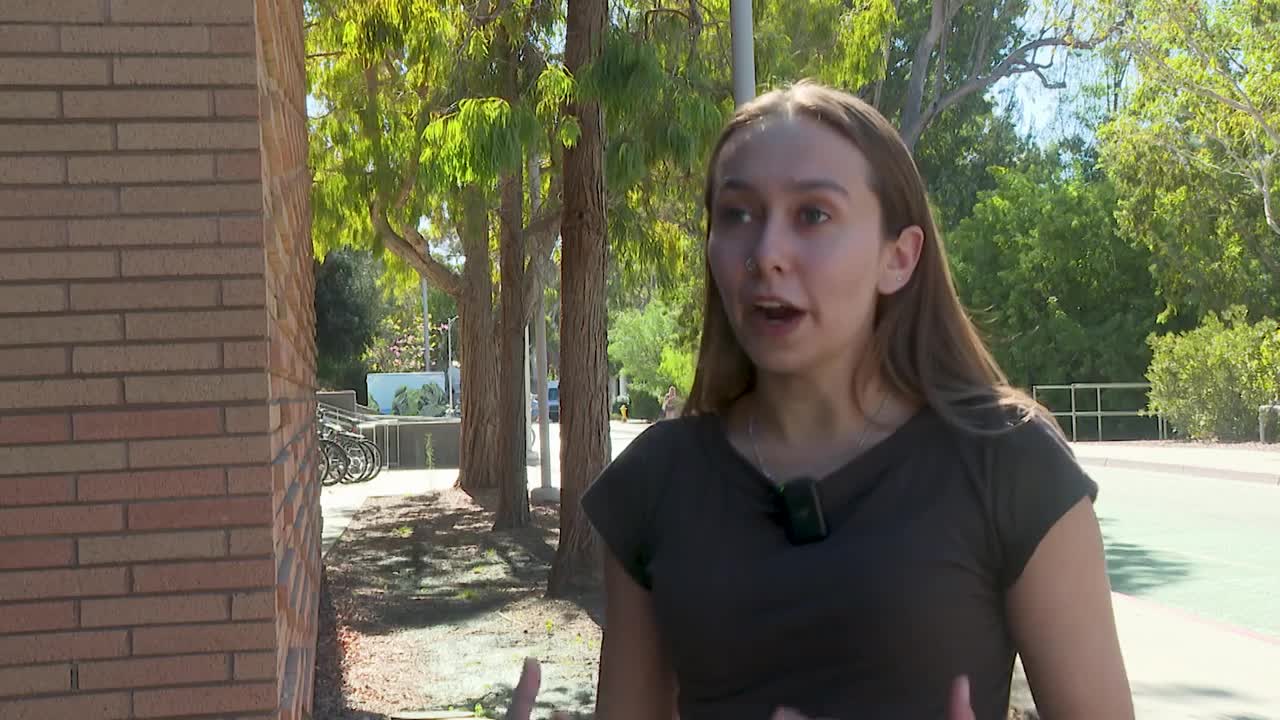



More than 100 Cal Poly students packed a classroom Friday morning to share their thoughts directly with university leadership about a proposed development project that would transform part of the university's West Campus.
The proposal would convert approximately 18 acres of university farmland along Highland Drive into a mixed-use development that could include student housing, housing for faculty, staff, and alumni, retail businesses, a grocery store, and potentially a hotel, conference center, and event space.
The project has generated significant debate on campus in recent months, particularly among students concerned about the loss of agricultural land and the potential impact on Cal Poly's Learn by Doing philosophy.
One of the biggest developments from Friday's listening session was Armstrong's announcement that the university is exploring options to preserve the lemon grove that was originally slated for removal as part of the project. If preserved, the change would reduce the proposed development footprint from roughly 30 acres to about 18 acres.
"Sometimes you have to change, to preserve the things you absolutely don't want to change," Armstrong told attendees during a presentation outlining the university's vision for the project.
Following Armstrong's presentation, about a dozen students spoke directly to him about their concerns.
Among them were leaders of Cal Poly's Sierra Club chapter. President Simryn Regehr said students want environmental reviews completed before the project moves forward.
"New developments obviously come with environmental implications," Regehr said, "and although there will be CEQA processes done, we don't want to move forward with this proposal until those processes have been completed, and we have an understanding that this is going to move forward with no egregious harms to the local environment."
Sierra Club Vice President Callum Graham pointed to potential economic ramifications that he says he would like to see the university deeply consider.
"I think that the educational resources that are available also are worth noting, in terms of the lost revenue in the future — students that won't attend or donors that won't give them money because they don't trust our word when we say that we'll protect the land," Graham said.
Other concerns raised during the meeting included the loss of prime farmland and potential impacts on Cal Poly's Learn by Doing model.
However, not all students opposed the project.
Some students said parts of the proposal could help address existing needs on campus, including housing availability and access to everyday services.
"The grocery store would be nice for people on campus who don't have cars, but also I think the bigger issue right now is parking," said student Christine Brockman. "That would just bring more people to this area."
Student Ashton Scheerer said housing should remain a priority as discussions continue.
"I guess it's always a tradeoff, but it's a large campus, and hopefully we can build more housing," Scheerer said.
Another student, Idris Sanatkar, said maintaining educational opportunities should be a key consideration.
"As long as they plan accordingly to make sure we get the same opportunities, then that'd be great," Sanatkar said.
Cal Poly has maintained that the project would enhance Learn by Doing opportunities and that there would be no net loss of agricultural land.
Graduate student Sawyer Claussen said the possibility of preserving the lemon grove stood out as a meaningful compromise.
"I thought that was a really interesting and optimistic compromise," Claussen said.
Armstrong also said he is committed to preserving the university's agricultural land north of Highland Drive and preventing future development in that area.
Some students who attended Friday's event said they appreciated the opportunity to speak directly with university leadership, even when they disagreed with elements of the proposal.
"It would have been really easy for him to not go about speaking to students directly, but he had the initiative to come out here and really engage with us, and I really do appreciate that," Regehr said.
A decision on whether the West Campus project moves forward is expected in November.
Armstrong said the university plans to continue gathering feedback before a decision is made. He encouraged students to meet with him one-on-one and share concerns through student government representatives.
