

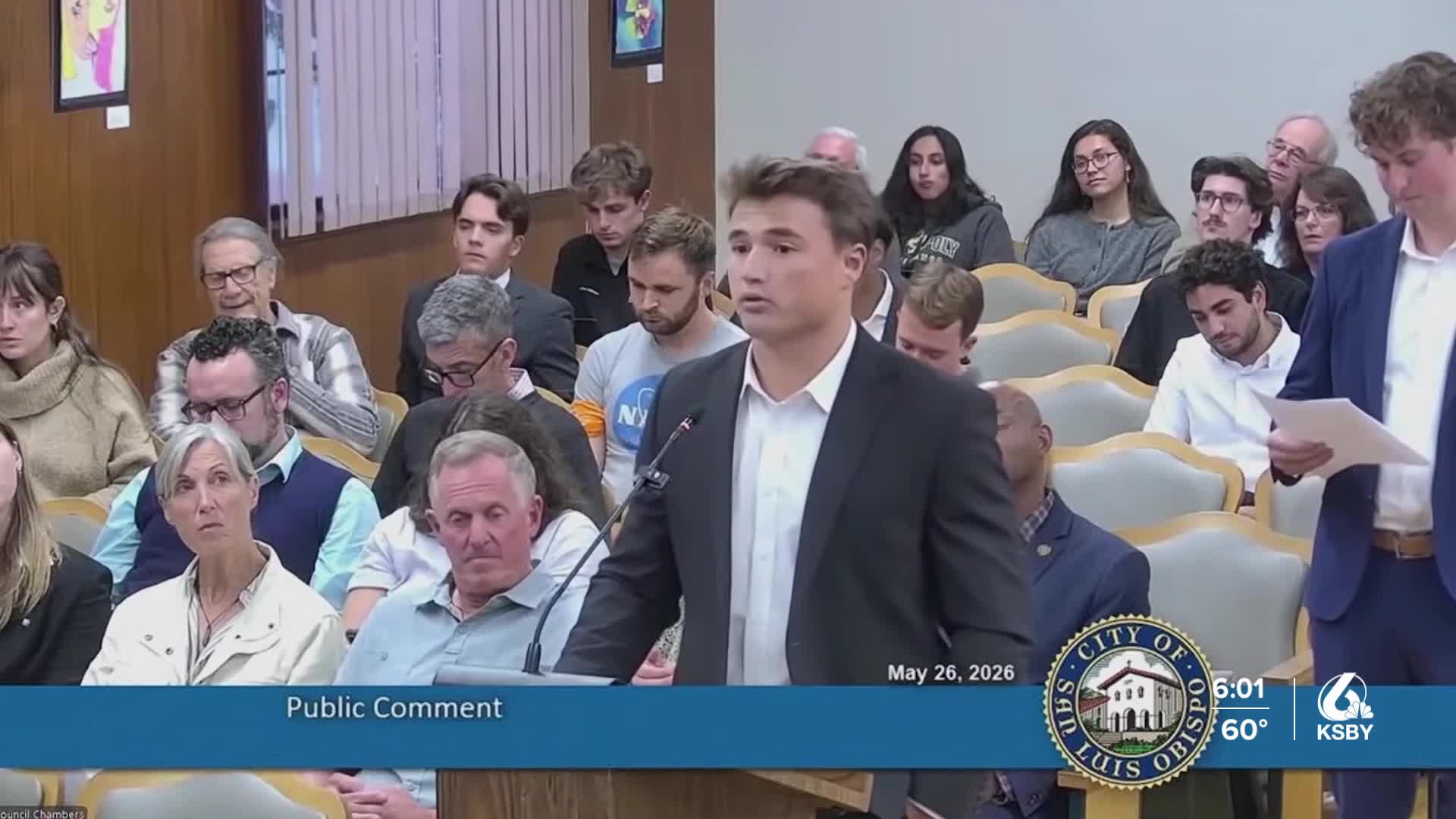


San Luis Obispo’s City Council is taking in the abundance of feedback they heard, and information they learned, from the Code Enforcement Special Session on Tuesday, May 26, where much of the focus was to find a way for fraternities, Cal Poly University, San Luis Obispo Police, and the City to better respond to incidents.
“There is clearly still work for us to do. President Armstrong has directed university leaders to hold all of our students to the Mustang Way, a foundational set of core values both on and off campus,” said Terrance Harris, Cal Poly's Vice President of Strategic Management & Student Affairs.
Nearby residents say they are facing an endless, never-ending cycle where they are told on weekdays to file complaints with Code Enforcement, on weekends to call the SLOPD non-emergency line, who may or may not have the bandwidth to respond to noise violations at parties, fraternities holding non-pre-approved events at satellite houses, students vomiting in their front yards, public urination, and endless trash.
“Our chapter has made a real effort to follow the rules, but we’ve experienced multiple situations that point to a bigger problem with how code enforcement is currently being applied,” said Ben Pfaff, president of the Kappa Pi chapter of Sigma Nu.
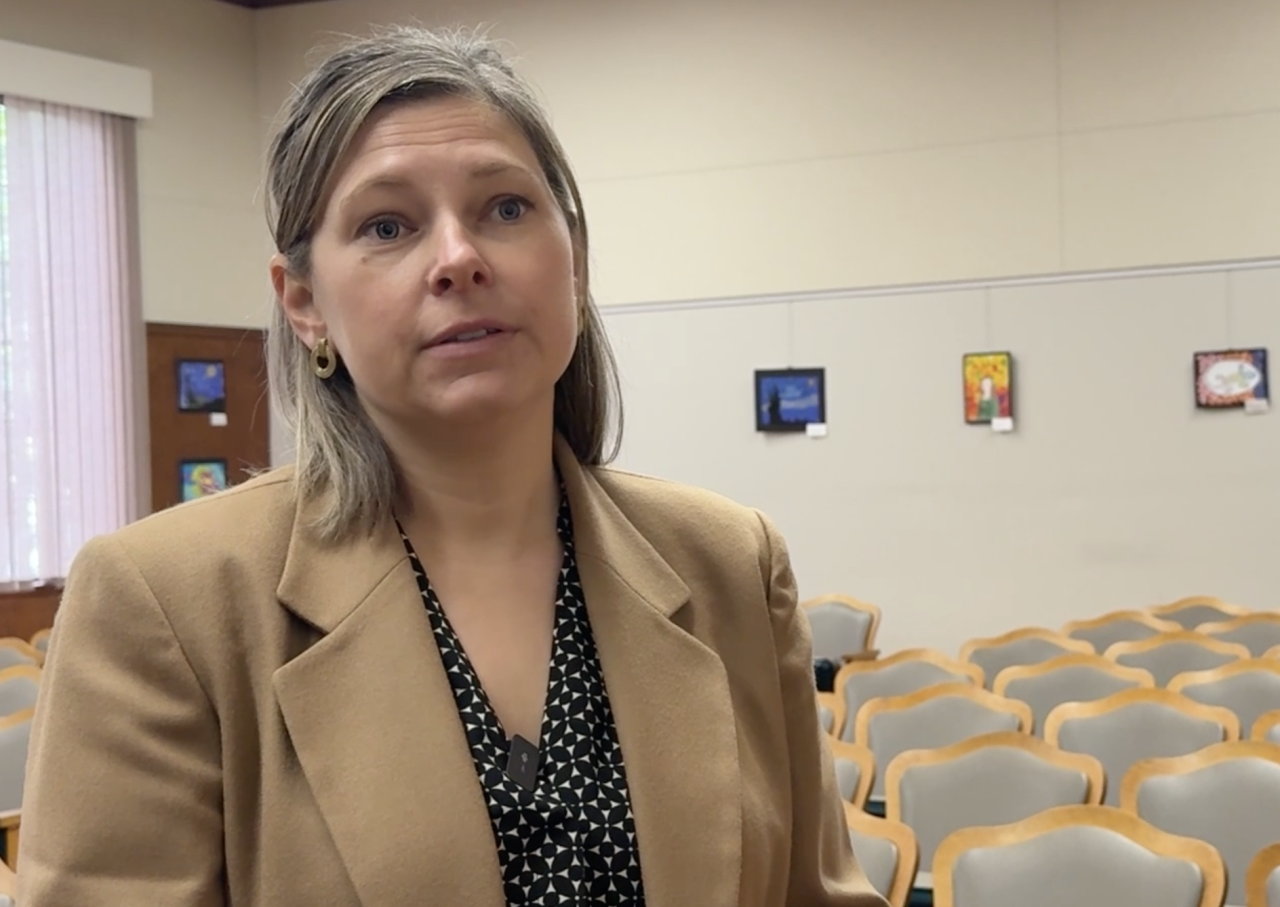
Prior to the meeting, KSBY Reporter Jessica Roe took a tour of the neighborhood with Laurel Smith, whose property her family inherited, and at the time, Cal Poly was much farther from their front yard. Now, the tennis courts and audio speakers are just yards away from their driveway.
“Let Cal Poly pay the price of the fraternities and sororities; they’re not all bad," Smith said. "They do amazing work in this community, but move them to campus.”
Several other local residents agreed the school needs to investigate creating a "Greek Row" like many other universities around the country have, whereby the school itself manages all facets of behavior, noise levels, and curfew, with the hope that this will stop the "creep" of trash and loud parties into the streets they call home.
“Our chapter has made a real effort to follow the rules, but we’ve experienced multiple situations that point to a bigger problem with how code enforcement is currently being applied,” Pfaff said.
Mayor Erica A. Stewart seemed to almost sound surprised when she asked the code enforcement officer what happens after the city transmits complaints every Monday, from the 48 hours prior over the weekend, to Cal Poly.
“Do you ever get a follow-up on what happens?" the Mayor asked.
"No, I have not,” said the Code Enforcement Officer.
In addition to listening to feedback, which lasted four hours and 57 minutes, the Community Development Program presented a report to a special code enforcement study session to the City Council, titled “Code Enforcement Priorities - Safe and Livable Neighborhoods and Housing."
“I imagine that any future studying of additional regulations or different regulations would extensive public outreach to all members of the community that want to be involved in this conversation," Timmi Tway, Community Development Director for the City, told KSBY.
City council meetings are available for replay on the City's YouTube channel. KSBY notes that, at a point in the meeting when a resident stated that the noise is the reason Cal Poly President Jeffrey D. Armstrong does not live on campus, that statement is inaccurate. Reporter Jessica Roe spoke to both the person who made the claim and the university, which confirmed the president and his wife have resided at the on-campus president's home for more than a decade. The claimant apologized for hearing this claim from others and then repeating it in a public forum on the record.
"I want to be direct with this council, both the state and the city publish health and city standards," said Tyler Coari, co-founder, SLO Tenants Union. "They must be enforced robustly, and that requires resources.
The day prior to the meeting, resident Smith told KSBY, “We have trash cans lining the alley behind our house and they never get put away and then the seagulls and the birds get in them and then it’s trash everywhere. Do the students pick it up? No. I call it 'Polyville, the million-dollar slum.' I think the only solution is to move them onto campus."

Reporter Jessica Roe reached out to Cal Poly University, and spokesperson Matt Lazier provided the following statement: "Cal Poly values its relationship with the City of San Luis Obispo and our nearby neighbors, and the university remains committed to working collaboratively with local authorities, residents, and our campus community to address any issues or concerns that arise. As an active member of the community in which Cal Poly students, staff, and faculty live and learn, the university is committed to being a good neighbor."
The report presented to Council on Tuesday states, “Fraternity and sorority enforcement has become one of the fastest and most resource-intensive categories, with 169 investigation requests and 90 formal cases between 2024 and April 2026."
City staff is asking whether the City Council concurs with the staff recommendations regarding enrichment priorities, response time, the fine structure, a potential new regulatory arm for fraternity and sorority houses, land-use violations, and more.
“We really want to look at - are these regulations we have on the books now, helpful? Are they enforceable?" said Tway, in her role as the city's Community Development Director. "Are they creating the type of neighborhoods we’d like to have, or are there things we need to do, potentially learning from other communities that have universities or colleges in them or nearby? Are there things we can do to have more effective regulations so that everyone can live in the neighborhood together?”
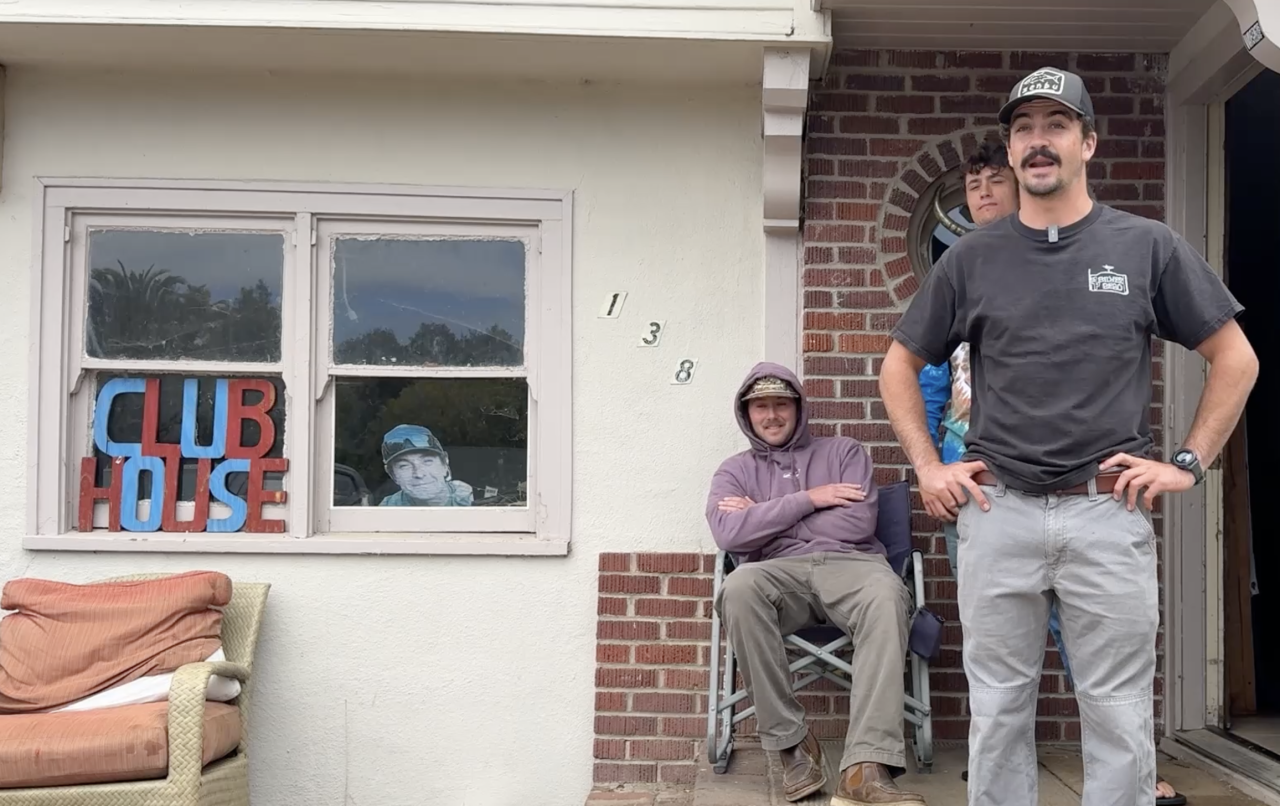
“I do think the standards are pretty standard for a college town, right now. I feel like the cops come down the street all the time, give tickets out all the time,” said Charlie Rehm, a senior at Cal Poly who lives in a house he says is in between two fraternity houses, causing spillover of parties into his residence, which boasts a bright "Club House" sign on the front. “The cops come, they tell us to shut it down, or give us a warning, then we go pay it, downtown at the courthouse.”
Tuesday's agenda documents stated the City will, “Receive a presentation on the City’s Code Enforcement program, take public testimony, and consider providing direction to staff…”
Matters being considered include the following:
1. Concurrence on the existing Enforcement Priorities & Response Time Standards that are currently in place for code enforcement matters
2. Adding a work plan item to the 2027-29 Financial Plan to explore and implement adjustments and simplifications to the Administrative Fine Structure for code enforcement violations
3. Adding a work plan item to the 2027-29 Financial Plan to analyze and develop an alternative regulatory framework for Fraternity and Sorority Houses
4. Continuing enforcement of fraternity and sorority land use violations consistent with the existing Enforcement Priorities & Response Time Standards, prioritizing violations that result in disturbance to others
5. Undertaking an effort to analyze time-intensive code enforcement areas to identify and implement operational efficiencies to address the rising case load of the team
6. Whether there are any neighborhood wellness, property maintenance, or nuisance standards the council wishes to update in light of current operational challenges and evolving community needs
7. Whether there are any future, topic-specific study sessions needed to support more in-depth policy development
San Luis Obispo Community Reporter Jessica Roe will have more on this story on KSBY News at 4 p.m. on Tuesday.
If you have something you would like Jessica to look into, you can reach her directly via email at jessica.roe@ksby.com.
